
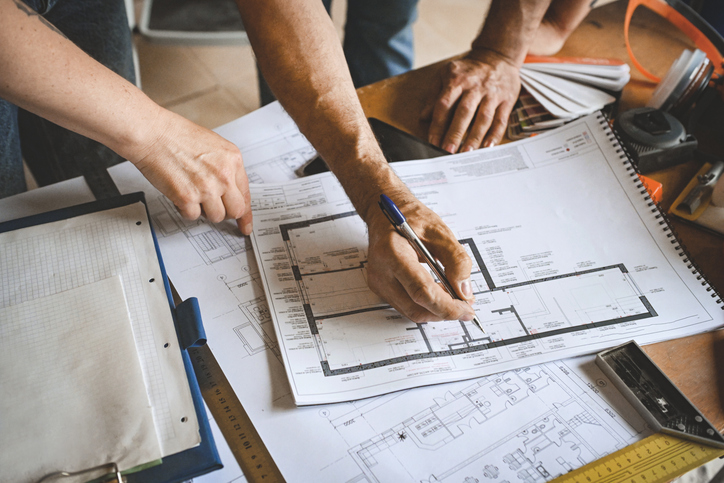
Room Design Layout | How to Plan Every Space in Your Florida Home
Room design layout is the process of planning how furniture, pathways, focal points, and functional zones work together within a space. A well-planned layout makes a room feel intentional, comfortable, and easy to live in — regardless of its size. In Florida homes, where open floor plans and indoor-outdoor flow define how spaces connect, getting the layout right is the foundation of every successful interior design project.
What Is Room Design Layout and Why Does It Matter?
Room design layout is the spatial plan that determines where everything goes — and why. It covers furniture placement, traffic flow, focal points, functional zones, and the relationship between natural light, doors, and windows. A layout is not decoration. It is the structure that makes decoration work.
In Florida homes, room layout carries extra importance because of how people actually use the space. Central Florida homes are built for year-round living — not just for weekends. Open floor plans connect the kitchen, dining area, and living room into one continuous space. Florida rooms and lanais extend living areas outdoors. Bedrooms need to feel like genuine retreats from the heat. Every one of these realities has a layout implication.
A poorly planned layout creates friction in daily life — rooms that are hard to navigate, conversation areas that feel disconnected, dining spaces that are too tight to pull out a chair. A well-planned layout removes that friction entirely. You stop noticing the room and start enjoying it. That is the goal every time.
The practical starting point is always the same: measure everything before you move anything. Room dimensions, ceiling height, window and door positions, fixed architectural features like fireplaces or structural columns — all of it on paper or in a planning app before a single piece of furniture is touched. Layout decisions made from memory rather than measurement are the most common source of expensive mistakes I see in residential projects across Central Florida.
How Do You Plan a Room Layout Step by Step?
Planning a room layout follows a clear sequence. Skip a step and you create problems that are hard to fix once furniture is in place and flooring is down.
Step one: measure the room precisely. Length, width, ceiling height, and the exact position of every door, window, power outlet, light switch, and HVAC vent. These fixed elements define what is possible. A furniture arrangement that blocks an air conditioning vent in a Florida summer is not a workable layout — no matter how good it looks on paper.
Step two: identify the focal point. Every room needs one. In a living room it is usually a fireplace, a feature wall, or the view to the outdoor space. In a bedroom it is the bed wall. In a dining room it is the table and the light fixture above it. Arrange the room around the focal point — furniture should face or acknowledge it, not fight it.
Step three: plan traffic flow before you place furniture. Main pathways through the room need a minimum of 36 inches of clear width. Secondary pathways — between a sofa and a coffee table, for example — need 18 to 24 inches. Mark these routes on your floor plan before placing any large pieces. Furniture that blocks natural movement through a room will always feel wrong, no matter how well it is styled.
Step four: group furniture by function. A living room conversation area works when seats are close enough to talk comfortably — typically no more than 8 to 10 feet apart. A reading corner needs its own light source and a surface for a drink or book. A home office zone in an open plan needs a clear visual boundary. Define the function first, then arrange the furniture to support it.
What Are the Best Room Layout Ideas for Florida Open Floor Plans?
Open floor plans are the defining feature of most Central Florida homes built in the last 30 years, and they create a specific layout challenge: too much space with no natural structure. The solution is zone definition — creating the feeling of separate rooms without walls.
Area rugs are the most effective zoning tool available. A rug under the living room sofa grouping instantly defines that zone as distinct from the dining area, even when the flooring is continuous throughout. The rug needs to be large enough to anchor all the furniture in the zone — a common mistake is choosing a rug that is too small, which floats furniture rather than grounding it. In a standard Florida living area, a 9 x 12-foot rug is usually the minimum.
Pendant lighting does the same work vertically. A cluster of pendants over a dining table marks that zone from the ceiling plane. A statement floor lamp in a reading corner creates a lit boundary that separates it from the adjacent seating area. Lighting placement in an open floor plan is layout work — not just ambience.
Furniture arrangement creates the strongest zone definition of all. Position the back of a sofa facing the kitchen or entry to mark the boundary of the living zone. Use a console table behind the sofa to reinforce that edge visually. Keep dining furniture proportioned to its zone — oversized dining tables in an open plan consume the whole space and make every zone feel smaller. I use scaled floor plans on every open plan project I take on in Central Florida because the proportions that look right in a showroom rarely work the same way in an actual home.
This is exactly where a professional room layout plan makes the difference. At Stones Design LLC, Marilou produces scaled room layout plans for every project — based on real measurements, real furniture, and how you actually live in your home. Visit our Interior Designer Services page to find out more, or call 407-808-4011 to book a free consultation.
How Do You Design a Bedroom or Living Room Layout for a Small Space?
Small rooms require a more disciplined approach to layout than large ones. Every piece of furniture needs to earn its place. The principles are the same — measure, identify the focal point, plan traffic flow — but the tolerance for error is much lower.
In a small bedroom, the bed placement drives everything else. Place the bed against the longest uninterrupted wall, ideally centred beneath any architectural feature like a window or feature wall. This maximises floor space on both sides for safe, comfortable movement and keeps the room feeling balanced. Avoid placing the bed in the centre of the room or diagonally — both approaches consume floor space without adding function.
Vertical space is underused in almost every small room I encounter. Floor-to-ceiling curtains hung close to the ceiling make windows appear larger and the ceiling higher. Tall, narrow bookcases draw the eye upward. Wall-mounted bedside lighting and floating shelves free up floor space that bedside tables and freestanding shelves would otherwise occupy. In Florida bedrooms where ceiling fans are standard, the vertical dimension of the room is already part of the functional design — use it for storage and style too.
In a small living room, resist the instinct to push all furniture against the walls. This is one of the most common layout mistakes I see. It stretches furniture away from conversation distance and leaves the centre of the room empty and awkward. Instead, bring the sofa and chairs slightly away from the walls — even 6 to 10 inches — and the room immediately feels more purposeful and better proportioned.
When Should You Hire an Interior Designer to Plan Your Room Layout?
Hire an interior designer for room layout planning when the consequences of getting it wrong are expensive or difficult to reverse. New flooring throughout, a kitchen or bathroom remodel, a whole-home furniture purchase, or a significant renovation are all situations where a professional layout plan pays for itself.
Layout mistakes are one of the most common and costly outcomes of DIY interior design. A kitchen island placed 6 inches too wide blocks the dishwasher from opening fully. A sofa purchased for a room that looked bigger in the showroom cannot fit through the front door. A dining table sized for the room as photographed online makes the space impossible to navigate once chairs are pulled out. These are not hypothetical — they are the calls I receive from Central Florida homeowners who need a redesign before they have finished the first one.
Interior designers also bring spatial intelligence that is genuinely difficult to develop without training and project experience. Reading a floor plan accurately, visualising how a 3D space will feel from a 2D drawing, understanding how light moves through a room across a day — these skills take years to develop. The result of that expertise is a layout that feels effortless to live in because every decision has been worked through before anything was purchased or installed.
For Florida homes specifically, a designer who works regularly in Central Florida brings local knowledge that generalist design advice cannot provide. Open floor plan proportions, indoor-outdoor flow between living rooms and lanais, humidity-appropriate materials, ceiling fan placement and its impact on furniture arrangement — these are the practical realities of Florida home design that a local designer navigates on every project.
Frequently Asked Questions About Room Design Layout
What is the first step in planning a room design layout?
The first step is measuring the room accurately — length, width, ceiling height, and the position of every door, window, and fixed element such as power points and HVAC vents. Without precise measurements, furniture decisions are guesswork. Once you have the room’s dimensions, you can plan traffic flow, focal points, and furniture placement with confidence.
How do you arrange furniture in an open floor plan?
In an open floor plan, arrange furniture to define distinct zones — living, dining, and kitchen — without walls. Use area rugs to anchor each zone, position sofas and chairs facing inward to create conversation areas, and allow a clear 36-inch traffic pathway between zones. Avoid pushing all furniture against the walls, which leaves the centre of the room feeling empty and disconnected.
What is the best room layout for a small bedroom in a Florida home?
In a small bedroom, place the bed against the longest uninterrupted wall to maximise floor space on both sides. Use wall-mounted bedside lighting instead of table lamps to free up surface space. Opt for a low-profile bed frame and built-in or mirrored wardrobe doors to keep sightlines clear and the room feeling open and airy — which matters even more in Florida’s warm climate.
How much space do you need between furniture pieces in a room layout?
Allow a minimum of 36 inches for main traffic pathways through a room and 18 to 24 inches between a sofa and coffee table for comfortable reach. In a dining area, leave 36 to 48 inches between the table edge and the wall or nearest furniture so chairs can be pulled out easily. These clearances are the difference between a room that functions and one that feels perpetually crowded.
Can an interior designer help with room layout planning for an existing home?
Yes — interior designers are frequently hired specifically for layout planning in existing homes, not just during renovations. A designer assesses your current furniture, room dimensions, lifestyle habits, and traffic flow patterns, then produces a scaled layout plan that maximises the space you already have. For Florida homes where indoor-outdoor living and open floor plans create layout complexity, professional guidance consistently delivers results that self-directed rearrangements cannot.
Ready to get your room layout right the first time? Stones Design LLC’s Interior Designer Services cover space planning, furniture layout, and full design execution for homes across Central Florida. Book a free consultation and let Marilou build a room layout plan that works for how you actually live — call 407-808-4011.