
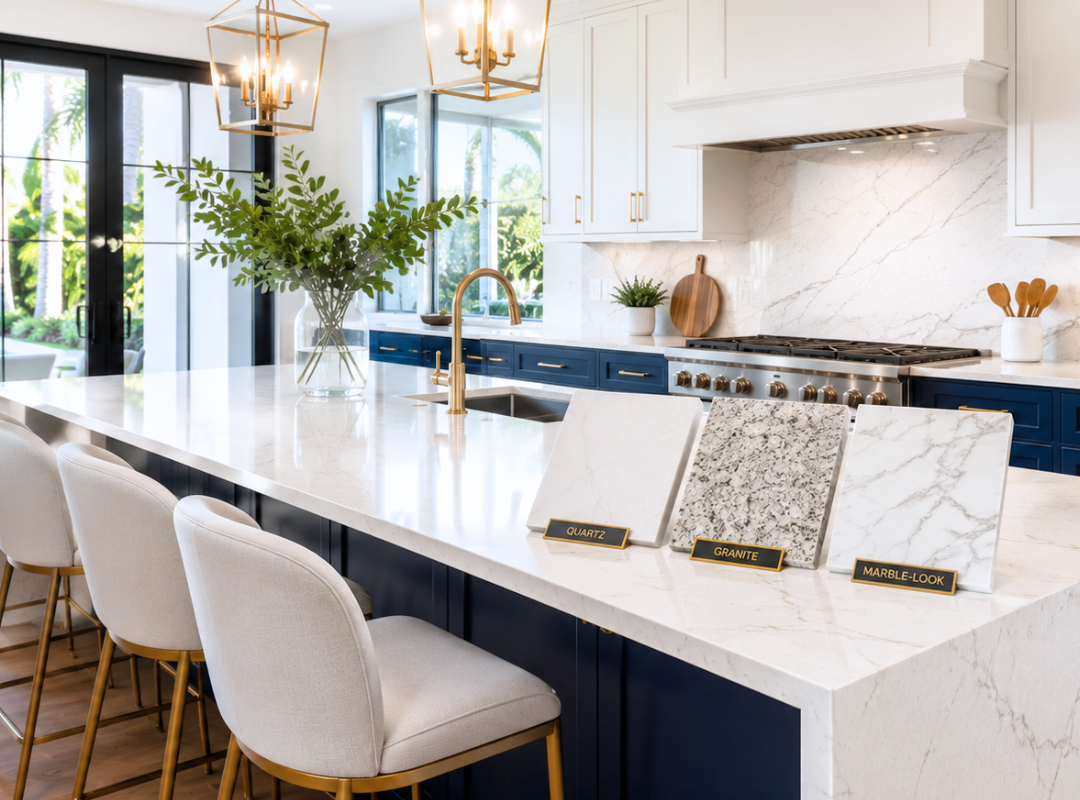
How to Choose the Right Kitchen Countertop Material
Quartz is engineered stone — roughly 90 percent crushed quartz mineral bound with resin and pigment. Granite, marble, and quartzite are all natural stone, quarried in slabs and finished. Wood, stainless steel, and concrete remain niche choices best used as accent surfaces, not primary kitchen counters in a Florida home.
How do you compare quartz, granite, marble, and quartzite?
Quartz is the most consistent and forgiving — non-porous, never needs sealing, comes in any colour or pattern. Granite is the most dependable natural stone — durable, heat-resistant, and visually unique slab to slab. Marble is the most beautiful but the softest of the four — etches with lemon juice, stains with red wine. Quartzite is the quiet winner — natural stone that performs almost like quartz but with the depth only stone can offer.
The right comparison is not which material is best — it’s which trade-off matches the household. A family with three children and a marble counter will spend ten years apologising to it. The same family with quartzite or quartz will spend ten years cooking on it without thinking twice.
Which countertop material is the most durable for everyday use?
Quartz is the most durable countertop material for everyday use because it is non-porous, scratch-resistant, and stain-resistant out of the slab. It needs no sealing, handles citrus and red wine without etching, and keeps its appearance for 20-plus years with normal cleaning. Granite and quartzite are nearly as durable, with a small ongoing sealing requirement once or twice per year.
Marble is the least durable of the four — soft, porous, and reactive to acids. That said, durable does not always mean correct. A serious baker may want marble specifically because it stays cool. A professional cook may prefer the heat tolerance of granite over the resin-bonded surface of quartz. Match the material to the cooking, not just to the lifestyle marketing.
How much do different countertop materials cost?
Installed countertop costs in Florida sit roughly as follows. Quartz: $60 to $120 per square foot. Granite: $50 to $130 per square foot. Quartzite: $80 to $200 per square foot. Marble: $75 to $250 per square foot for standard varieties; rare imports go higher. These figures include slab, fabrication, edge profile, and standard installation. They do not include sink cutouts, removal of old counters, or unusual layouts.
For a typical mid-sized Florida kitchen with 50 square feet of countertop, that puts total counter cost between $3,000 (entry-level granite) and $12,500 (premium quartzite or imported marble). The price gap inside any single material — based on slab origin, pattern rarity, and edge complexity — is often wider than the gap between materials. Slab selection is where designers earn their fee.
Material choice is the single most visible decision in any kitchen — and the one most often regretted when made alone. At Stones Design LLC, Marilou matches the surface to the way you actually use the space, the light in your home, and the long-term plan for the property. Want to get the choice right the first time? Visit Stones Design LLC’s interior designer services or book a free consultation — call 407-808-4011.
How do you choose the right countertop material for your home?
Walk through five honest questions before specifying any material. How often do you cook with acids — citrus, vinegar, tomato? How often do you wipe spills immediately versus the next morning? How much variation across the slab do you actually want to see? What is the long-term plan for the home — five years or twenty? And what is the realistic counter budget once edges, cutouts, and installation are included?
If your shortlist has already narrowed to two of the most common Florida choices, read the full quartz vs granite comparison for Florida homes. The piece breaks down sealing, heat resistance, and humidity behaviour with real Florida project examples.
For homeowners weighing more than two materials at once, our deeper guide on choosing the best countertop material walks through the full decision matrix — including how to factor in colour, edge profile, and long-term maintenance habits.
Frequently Asked Questions About Choosing Countertop Material
What is the most low-maintenance kitchen countertop material?
Quartz is the most low-maintenance kitchen countertop material because it is non-porous and never needs sealing. Daily care is mild soap and water. It resists stains from coffee, wine, and citrus, and it does not harbour bacteria. For households that want a kitchen surface that genuinely takes care of itself, quartz is the consistent answer.
Is marble a good choice for a busy family kitchen?
Marble is generally not the best choice for a busy family kitchen because it etches on contact with acidic foods like lemon, vinegar, and tomato sauce. Stains from oil and red wine are also common. Households that love marble’s look but want fewer worries often pick a marble-look quartz or a quartzite with similar veining and far higher durability.
Does quartz countertop discolour over time?
Quartz countertops can discolour with prolonged direct sunlight exposure because the resin binder slowly yellows under UV. This is rare in normal kitchens but worth considering for outdoor kitchens or counters under a south-facing Florida window. For sun-exposed surfaces, granite or quartzite is the safer specification — both are fully UV-stable.
Do natural stone countertops need to be sealed in Florida?
Yes — granite, marble, and quartzite all need sealing in Florida, typically once or twice per year. Florida’s humidity does not change the sealing schedule but does mean spills should be wiped quickly to avoid staining a freshly unsealed surface. A simple water-bead test on the counter shows when the seal is wearing thin and resealing is due.
How long should a kitchen countertop last?
A quality kitchen countertop should last 25 to 50 years with normal use. Quartz, granite, and quartzite routinely outlive the cabinets they sit on. The lifespan is driven less by the material and more by installation quality, daily habits, and whether the seal is maintained on natural stone. A well-installed counter is rarely the reason a kitchen needs remodelling.
Ready to pick a countertop you’ll still love in ten years? At Stones Design LLC, Marilou guides material selection inside a complete kitchen plan — slabs, edges, lighting, and cabinetry working as one. Explore our interior designer services or book a free consultation — and let’s choose the surface your kitchen deserves.