
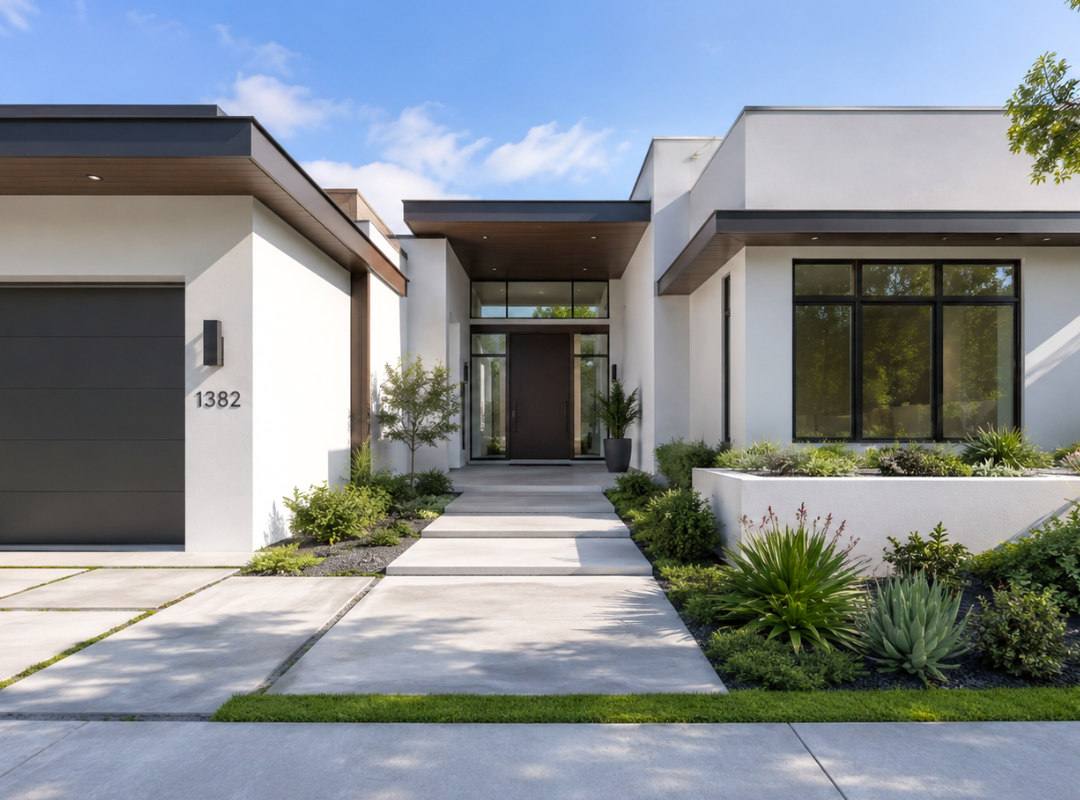
Modern House Minimalist Design | A Practical Guide for Florida Homes
Modern house minimalist design is the practice of creating a home where every element — material, colour, furniture, and detail — serves a deliberate purpose. Nothing is included for decoration alone. In Florida homes, where abundant natural light, open floor plans, and indoor-outdoor living are the standard, minimalist design is not just an aesthetic choice. It is a genuinely practical way to make a home feel calm, spacious, and effortlessly liveable.
What Is Modern House Minimalist Design and How Does It Work?
Modern house minimalist design is a design philosophy built on one core principle: keep only what is necessary, and make every remaining element the best version of itself. It draws from the modernist architectural tradition — clean structural lines, honest use of materials, and an absence of decorative excess — and applies it to the way people actually live at home.
The ‘modern’ and ‘minimalist’ labels are often used interchangeably, but they are not the same thing. Modern design refers to a specific mid-twentieth-century aesthetic characterised by flat planes, open plans, and an emphasis on function over ornament. Minimalist design is a broader philosophy — one that can be applied to any era or style. In practice, modern minimalist design combines the two: the architectural language of modernism with the disciplined restraint of minimalism.
What makes it work is not subtraction alone. Removing clutter from a poorly designed room does not produce a minimalist room — it produces an empty one. True minimalist design works when the things that remain are genuinely good: well-proportioned furniture, quality materials, considered lighting, and a spatial plan that makes the room feel purposeful. Every surface, finish, and fixture earns its place.
In Florida homes, this approach resolves a problem that most homeowners encounter at some point. Open floor plans, generous glazing, and the flow between indoor and outdoor spaces create large, light-filled interiors that are genuinely difficult to furnish without either overcrowding them or leaving them feeling sparse. Modern minimalist design gives these spaces exactly what they need — a clear spatial logic and a restrained material palette that lets the architecture do the work.
How Do You Apply Minimalist Design Principles to a Florida Home?
Minimalist design principles apply to Florida homes more naturally than to almost any other residential context. The starting point is the architecture itself. Florida homes are built for light, air, and connection between inside and outside. The less you put in the way of that, the better the home performs as a living environment.
Begin with the floor plan. Open layouts need spatial logic — clearly defined zones for living, dining, and kitchen that feel distinct without walls to separate them. In a minimalist approach, those zones are defined by furniture placement, area rugs, and lighting rather than by visual complexity. One well-chosen sofa grouping, a single large rug, and a pendant cluster above the dining table does more for an open Florida living area than a roomful of layered accessories ever could.
Natural light management is the second principle. Florida’s light is intense and directional — it shifts dramatically from morning to afternoon. In a minimalist home, window treatments are functional rather than decorative: sheer linen panels or simple roller blinds that filter glare without blocking the connection to the outdoors. Avoid heavy drapes, multiple layers of treatment, and anything that visually interrupts the window plane.
Storage is the discipline that makes minimalism liveable rather than merely aspirational. Every minimalist home needs more built-in storage than a conventionally furnished home — because the objects of daily life do not disappear just because you have removed visual clutter from the room. Custom joinery, built-in wardrobes, handleless kitchen cabinetry, and integrated shelving are the infrastructure of minimalist design. Without them, the philosophy collapses into daily frustration.
What Colours, Materials, and Finishes Define a Modern Minimalist Interior?
The colour palette of a modern minimalist interior is built on restraint, not absence. Warm whites, soft greiges, concrete greys, and muted taupes form the foundation. In Florida, warm neutrals consistently outperform cool greys — the state’s intense, warm natural light makes cool palettes feel stark rather than calm. The goal is brightness without sterility.
Depth in a minimalist palette comes from texture and material variation, not from additional colours. A room painted in a single warm white can feel rich and layered if the surfaces within it have genuine material quality — a honed stone countertop, a brushed timber floor, a raw linen sofa, a concrete pendant shade. Each material has its own tonal variation and tactile quality that reads as visual interest without adding noise to the palette.
Natural stone is one of the most important material choices in a Florida minimalist interior. Stone surfaces — granite, quartz, and marble for countertops; limestone and travertine for flooring and feature walls — bring the material honesty that is central to the modern minimalist vocabulary. They also perform exceptionally well in Florida’s climate: cool to the touch, humidity-resistant, and durable over decades. A stone feature wall behind a freestanding bath or a full-height quartz kitchen splashback delivers the kind of architectural presence that a minimalist interior depends on.
Hardware and fixtures should be consistent and deliberately chosen. Brushed brass, matte black, and aged bronze all work within the modern minimalist palette — but choose one finish and apply it throughout. Mixed hardware finishes are the most common detail that undermines an otherwise well-executed minimalist interior. Consistency at this level of detail is what separates a professionally designed minimalist home from a room that simply has less in it.
Getting the material palette right is one of the most technically demanding parts of a minimalist design project — because there is nowhere to hide a poor material choice. At Stones Design LLC, Marilou works with homeowners across Central Florida to select, source, and specify materials that perform beautifully and last. Visit our Interior Designer Services page to see how we work, or call 407-808-4011 to start the conversation.
How Do You Furnish a Minimalist Home Without It Feeling Cold or Empty?
The most common misreading of minimalist design is the belief that it means living with less comfort. It does not. A well-furnished minimalist home is deeply comfortable — it just achieves that comfort through quality rather than quantity, and through material warmth rather than decorative layering.
Start with the sofa. In a minimalist living room, the sofa is typically the largest object and the one that sets the tone for everything else. Choose a frame with clean, low-profile lines — no rolled arms, no skirts — in a natural material: linen, boucle, or a high-quality performance fabric in a warm neutral. The sofa should be large enough to be genuinely comfortable and proportioned to the room — not scaled down because minimalism is perceived as sparse.
Warmth comes from layering textures, not objects. A jute rug under the coffee table, a wool throw over the arm of the sofa, a timber tray on a stone coffee table, a single large-format artwork on the feature wall — each of these adds sensory warmth and visual interest without introducing clutter. The rule is that every object in the room should be either functional, beautiful, or both. Objects that are neither have no place in a minimalist interior.
Lighting is the most powerful tool for preventing a minimalist interior from feeling cold. Recessed downlights set to a warm colour temperature (2700K to 3000K), a statement pendant over the dining table, and a floor lamp in the living zone create a layered light environment that feels inviting at any time of day. In Florida minimalist homes, a warm-toned artificial light scheme also balances beautifully against the cool brightness of the afternoon sun — making the home feel equally welcoming morning and evening.
How Does a Professional Interior Designer Bring Minimalist Design to Life?
Minimalist design is harder to execute well than it looks. The very restraint that defines it removes the safety net of layering and accessorising that makes conventionally furnished rooms forgiving. When there are fewer elements in a room, every element that remains is more visible — and more scrutinised. A poorly chosen sofa colour, an ill-proportioned coffee table, a lighting fixture that is 20 percent too small — these details read clearly in a minimalist interior and are expensive to correct after the fact.
A professional interior designer brings the spatial intelligence and material knowledge to get those decisions right the first time. That means producing scaled floor plans before any furniture is specified, selecting materials in the context of your actual home’s light and architecture rather than from a sample book, and managing the relationships between finishes — flooring, cabinetry, countertops, wall colour, hardware — so that every element works as part of a coherent whole.
For Florida homeowners pursuing a modern minimalist aesthetic, local design experience is particularly valuable. Marilou has been designing residential interiors across Central Florida for over 30 years. She understands how Florida’s light behaves in different orientations, which stone surfaces perform best in the state’s humidity, and how to plan the indoor-outdoor flow that defines the best Florida homes. These are not details you find in generic minimalist design guides — they are earned through decades of project work in this specific climate and this specific residential market.
The result of working with a designer on a minimalist project is a home that looks intentional because it is. Every proportion is considered. Every material is specified for both aesthetic and practical reasons. Every piece of furniture is chosen to contribute to the whole rather than simply occupy a space. That level of coherence is what distinguishes a genuinely well-designed minimalist home from one that is simply uncluttered.
Frequently Asked Questions About Modern House Minimalist Design
What is the difference between modern design and minimalist design?
Modern design refers to a specific mid-twentieth-century aesthetic — clean lines, functional forms, and materials like steel, glass, and concrete. Minimalist design is a broader philosophy built on the principle that less is more — eliminating everything unnecessary and keeping only what has genuine purpose or beauty. In practice, modern minimalist design combines both: the clean architectural lines of modernism with the intentional restraint of minimalism.
Does minimalist design work in a Florida home?
Yes — minimalist design works particularly well in Florida homes. Central Florida’s abundant natural light, open floor plans, and year-round indoor-outdoor living are naturally aligned with minimalist principles. Large windows require minimal window treatments to stay functional. Open plans benefit from restrained furniture selections that do not overcrowd connected spaces. Natural stone, timber, and concrete — the material palette of modern minimalism — all perform well in Florida’s climate.
What colours work best in a modern minimalist home?
The most effective minimalist colour palettes are built on neutral foundations — warm whites, soft greiges, concrete greys, and muted taupes. In Florida homes, warm neutrals outperform cool greys because they read as bright without feeling clinical under the state’s intense natural light. Introduce depth through texture — a natural stone feature wall, a linen sofa, a timber floor — rather than through multiple paint colours. One or two intentional accent colours, used sparingly, are all a minimalist palette needs.
How do you add warmth to a minimalist interior without cluttering it?
Warmth in a minimalist interior comes from material choices, not accessories. Natural timber flooring, linen upholstery, stone surfaces, and warm-toned metals like brushed brass or aged bronze all add warmth without adding visual noise. Layer textures rather than objects — a wool throw, a jute rug, a timber side table alongside a concrete lamp base. Each piece should be chosen deliberately and given space to breathe.
How much does minimalist interior design cost in Florida?
Minimalist interior design costs in Florida vary depending on scope. A single-room minimalist redesign typically ranges from $2,500 to $8,000 in designer fees, depending on the complexity of the space and furniture requirements. A whole-home minimalist design project can range from $10,000 to $30,000 or more. Because minimalism prioritises quality over quantity, material and furniture selections tend to be higher specification — but fewer pieces are needed overall, which balances the investment.
Ready to bring modern minimalist design into your Florida home? Stones Design LLC’s Interior Designer Services cover concept, materials, space planning, and full project management for residential clients across Central Florida. Book a free consultation and let Marilou build a minimalist design plan that is as practical as it is beautiful — call 407-808-4011.