
Living Room Interior Ideas That Actually Work for Florida Homes
Living room interior ideas are the design choices — layout, colour, lighting, furniture, and materials — that define how a space looks and how it actually lives. In Florida homes, the best living room designs balance natural light and airflow with personal style and durable materials. Here is how to get it right.
What Are the Best Living Room Interior Ideas for a Florida Home?
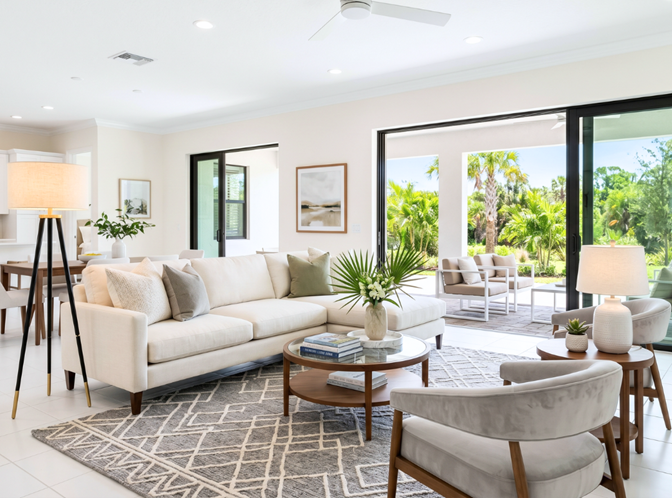
The best living room interior ideas for Florida homes start with the room’s relationship to natural light and the outdoors. Florida living is built around openness — large windows, sliding glass doors, and open-plan layouts that connect inside to lanai or outdoor space. Interior ideas that work here embrace that rather than fight it.
Start with neutral, warm foundations — sandy beige, warm white, or soft sage — and layer in texture through rugs, cushions, and woven furniture. Choose furniture with visible legs to maintain a sense of airflow and space. In Central Florida homes, the most successful living rooms feel light, grounded, and personal, not decorated.
Marilou’s rule: if a room looks great in photos but feels awkward to sit in, the furniture placement is wrong, not the furniture. Always solve layout first — then style follows naturally.
How Do You Choose the Right Colour Palette for Your Living Room?
The right colour palette for a Florida living room works with the light you have, not against it. Rooms that receive strong south or west-facing sunlight can handle slightly warmer neutrals — taupe, pale terracotta, warm linen. Rooms with north-facing light or limited windows benefit from cooler, brighter whites and soft reflective surfaces.
Avoid the mistake of painting every wall the same bold tone — one strong accent wall is enough. The remaining three walls in a light neutral create depth and make the accent pop without closing the room in. In Florida interiors, the outdoors is your fifth wall. Design your palette to work with the green and blue tones coming through your windows.
The most versatile living room colour starting point: Benjamin Moore White Dove (OC-17) for walls, a warm timber floor or tile, and one textile layer in a deep dusty teal or terracotta. That combination works in almost every Florida light condition.
What Furniture Layout Works Best in an Open-Plan Florida Living Room?
The most common layout mistake in open-plan Florida homes is pushing all the furniture against the walls. It creates a disconnected arrangement that looks like a waiting room, not a living space. Float the sofa and chairs inward instead, using a rug to anchor the zone and define the boundary between living area and dining or kitchen.
For a standard Florida rectangular living room, a U-shape or L-shape arrangement facing a focal point — whether that is a fireplace, a feature wall, or a mounted TV — creates the strongest sense of intimacy and function. Keep traffic lanes clear: a minimum 36-inch path between furniture pieces is the rule Marilou applies to every layout.
Coffee table tip: size matters more than style. A table that is too small makes the room look unfinished. Match your coffee table’s length to 70–80 percent of your sofa’s length for a proportional result.
| Getting layout right is the hardest part — and the most consequential. Marilou works through every space in detail before a single piece of furniture is moved. Visit our interior designer services page to see how the process works, or book a free consultation — call 407-808-4011. |
How Do Lighting and Natural Light Change a Living Room?
Lighting transforms a living room more than any other single change. Florida homes have abundant natural light, but most living rooms still need three layers of artificial light working together: ambient (overhead), task (reading lamps, table lamps), and accent (wall sconces, shelf lighting). Without all three, the room looks flat after dark.
The biggest upgrade Marilou recommends to Florida clients is dimmable lighting on all fixtures. Being able to shift from bright functional light to low warm ambience changes how the room feels for entertaining, watching films, or relaxing in the evening. Single-level overhead lighting cannot do this.
For windows: sheer linen drapes hung ceiling-to-floor diffuse Florida’s intense afternoon sun without blocking airflow or making the room dark. UV-filtering sheers protect furniture upholstery from fading — critical in Central Florida’s direct sun exposure.
Which Materials and Textures Hold Up Best in a Florida Living Space?
Florida’s heat and humidity demand material choices that perform as well as they look. Upholstery in performance fabrics — Sunbrella-grade linen or solution-dyed acrylic blends — resists humidity, fading, and the wear that comes with Florida indoor-outdoor living. Natural linen and cotton work, but require more maintenance in humid conditions.
Hard surface choices matter too. Porcelain tile and engineered hardwood handle Florida’s humidity better than solid hardwood, which can warp and gap in the humidity shifts between air-conditioned interiors and the outdoor environment. For rugs, low-pile wool or polypropylene blends are most resilient and easiest to maintain.
For a deeper guide to materials, see living room decorating mistakes to avoid and our roundup of modern living room interior design ideas for Florida homes.
Frequently Asked Questions About Living Room Interior Ideas
Q: What is the most important element of a living room interior design?
Layout is the most important element of living room interior design. How you arrange furniture determines traffic flow, conversation zones, and how connected the room feels. In Florida open-plan homes, defining the living area with a rug and a clear seating cluster gives structure without walls.
Q: What colours work best in a Florida living room?
Soft warm whites, sandy neutrals, and muted coastal greens work best in Florida living rooms. These tones reflect natural light, read cool in the heat, and create the breezy, open feeling Florida homes are known for. Avoid dark paint on all four walls — pick one accent wall if you want depth.
Q: How do I make a small living room feel bigger?
A small living room feels bigger when you use lighter colours, keep furniture legs visible, hang curtains ceiling-to-floor, and limit your piece count. In Florida, adding mirrors opposite windows amplifies natural light and instantly doubles the perceived depth of a compact space.
Q: What furniture style suits a Florida living room?
Transitional and coastal-contemporary styles suit Florida living rooms best. Clean lines, natural textures like rattan, linen, and wood, and upholstery that handles humidity without warping all perform well. Avoid heavy, dark traditional pieces — they absorb heat and feel out of step with Florida’s light-filled interiors.
Q: Do I need an interior designer for living room ideas?
You do not need a designer for minor updates, but a professional interior designer adds real value when you are reworking layout, selecting materials, or trying to achieve a cohesive look across an open-plan space. For Florida homeowners investing in a full living room transformation, a designer typically saves money by avoiding costly mistakes.
Ready to Transform Your Living Room?
| At Stones Design LLC, Marilou brings 30 years of hands-on design experience to every living space — from layout and material selection to lighting and furnishing that performs in Florida’s climate. Visit our interior designer services page to see the full scope of what we offer, or book a free consultation and let’s create a living room that genuinely reflects who you are. Call us on 407-808-4011. |