
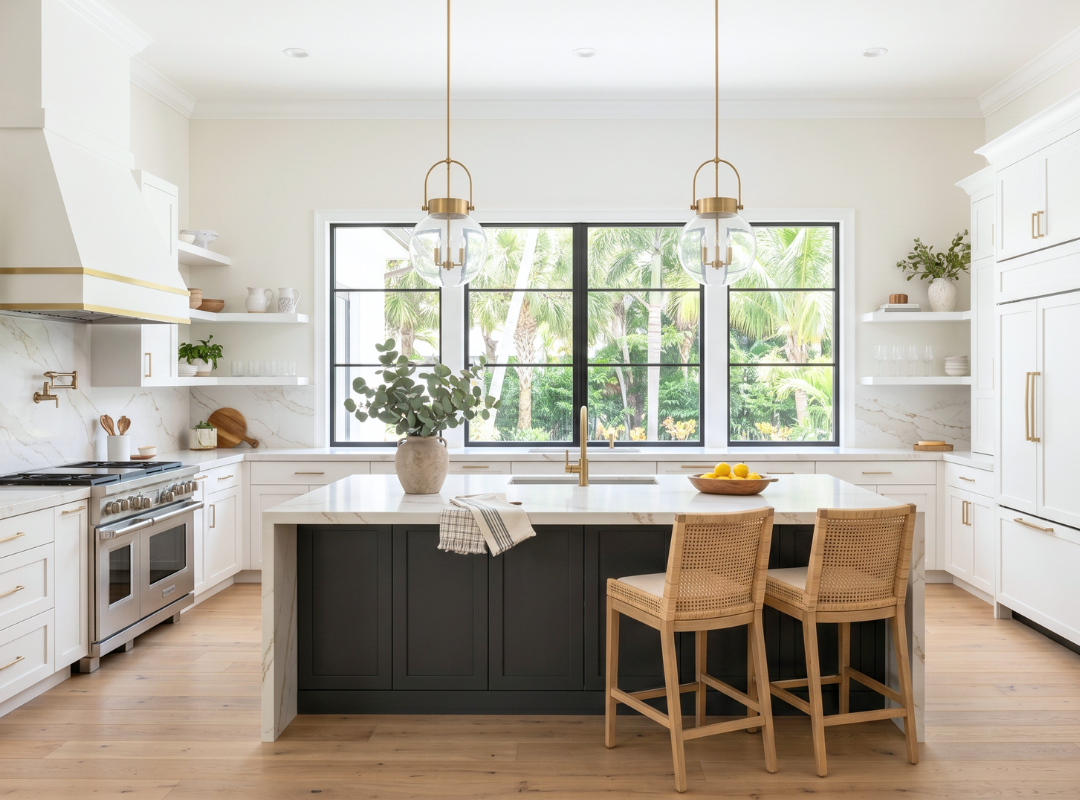
Transitional Kitchen Interior Design: How to Blend Classic and Modern
Transitional kitchen interior design blends the warmth of traditional style with the clean lines of modern design — giving homeowners the best of both worlds. It is the most popular kitchen design approach in Central Florida right now, because it works across a wide range of home styles and holds its value over time. Whether you are remodeling a dated kitchen or building from scratch, this guide covers exactly how to get a transitional kitchen right.
What Exactly Is Transitional Kitchen Design?
Transitional kitchen design is a style that sits confidently between traditional and contemporary. It uses classic elements — like shaker-style cabinets, natural stone countertops, and warm wood tones — alongside modern touches such as clean hardware lines, simple colour palettes, and streamlined fixtures.
The result is a kitchen that feels timeless rather than trendy. It does not lean hard into ornate detail the way a traditional kitchen does, and it does not strip everything back the way a minimalist modern kitchen does. It finds the balance point — and that is exactly why it works for so many Florida homeowners.
For Marilou’s clients across Orlando, Winter Park, and Winter Garden, transitional design consistently tops the request list. It is versatile enough to suit a 1990s split-level and a brand-new build, and it photographs beautifully for anyone planning to sell.
Which Cabinet Styles Work Best in a Transitional Kitchen?
The shaker cabinet is the foundation of almost every transitional kitchen. Its recessed panel door has just enough detail to feel classic without veering into ornate territory. Pair it with simple bar-pull hardware in brushed nickel or matte black, and you are firmly in transitional territory.
Two-tone cabinetry is another strong transitional move — typically white or soft grey uppers with a darker navy, forest green, or warm charcoal on the lower cabinets. This creates visual depth without complexity, and it is one of the most requested finishes in Florida kitchen remodels right now.
Avoid highly decorative raised-panel doors (too traditional) and ultra-flat slab fronts with no profile at all (too modern). The shaker sits exactly where you want to be. If you are working with an existing layout, painting existing shaker cabinets in a fresh neutral with updated hardware is often the single highest-return investment in a transitional refresh.
What Countertop Materials Suit a Transitional Kitchen in Florida?
Quartz is the workhorse of the transitional kitchen in Central Florida. It gives you the look of natural stone — marble-effect whites, soft greys, and warm veined patterns — with none of the maintenance that comes with real marble. In Florida’s humidity, quartz outperforms marble in longevity and practicality, which matters on a remodel investment.
Granite in a soft, consistent pattern (think Kashmir White or Santa Cecilia Light) also works well in a transitional kitchen. It adds natural variation without the visual noise of busier granite patterns that tend to date a space.
Waterfall countertops — where the stone drops vertically down the side of an island — are a modern touch that integrates beautifully into a transitional kitchen. They read as refined rather than ostentatious, particularly in a honed or leathered finish.
This is the stage where material selection makes or breaks the whole project. At Stones Design LLC, Marilou guides every client through countertop selection with real samples, real Florida project experience, and a clear brief on what will hold up in your home. Visit our Kitchen Design Orlando page or book a free consultation today — call 407-808-4011.
How Do You Choose the Right Colour Palette for a Transitional Kitchen?
Transitional kitchens work best with a neutral base and one intentional accent. White, warm grey, and soft greige are the most versatile cabinet colours — they sit comfortably between traditional cream tones and cooler modern greys, adapting easily to any countertop or flooring combination.
For Florida homes specifically, a slightly warm neutral on the cabinets reads better than a stark cool white. Florida’s natural light is intense and shifts throughout the day — a warm white does not bleach out in midday sun the way a cool bright white can. Marilou typically steers clients toward Benjamin Moore White Dove, Sherwin-Williams Accessible Beige, or a custom warm greige for kitchen cabinet colour in Central Florida projects.
The accent in a transitional kitchen usually comes through the island (a different colour to the perimeter cabinets), the backsplash tile, or a statement pendant light. Keep it to one accent — transitional design earns its elegance through restraint.
What Lighting and Hardware Finishes Complete a Transitional Kitchen?
Lighting does more work in a transitional kitchen than in almost any other style. The right pendant over the island ties the whole room together. Look for fixtures that have a classic form — a simple drum shade, an aged brass lantern, or a brushed nickel globe — rather than anything overly sculptural or industrial.
Under-cabinet LED lighting is non-negotiable in a transitional kitchen. It illuminates the countertop for practical tasks, adds warmth to the overall atmosphere in the evening, and makes the backsplash tile visible — which is especially important if you have invested in a statement tile.
Hardware finish should be consistent throughout — do not mix brushed nickel and polished chrome in the same kitchen. Matte black is the current transitional choice for clients wanting something slightly bolder. Brushed gold (not bright brass) is a warmer option that pairs beautifully with white cabinets and a white marble-effect quartz countertop. Choose one finish and commit to it across cabinet pulls, faucet, and light fixtures.
Frequently Asked Questions About Transitional Kitchen Interior Design
What makes a kitchen transitional rather than modern or traditional?
A transitional kitchen balances classic and contemporary elements — shaker cabinets paired with clean-lined hardware, or marble countertops with simple flat-front uppers. It is defined by the blend rather than a single pure style direction.
How much does a transitional kitchen remodel cost in Florida?
A transitional kitchen remodel in Florida typically costs between $25,000 and $75,000 depending on kitchen size, materials, and scope. Mid-range projects using quartz countertops, shaker cabinets, and new appliances generally land between $35,000 and $50,000.
What cabinet colour works best in a transitional kitchen?
White, warm grey, and soft greige are the most versatile cabinet colours for transitional kitchens. These neutrals sit comfortably between traditional cream tones and modern greys — adapting easily to different countertop and flooring choices.
Can a transitional kitchen work in a small Florida home?
Yes — transitional design is especially well-suited to smaller kitchens because its emphasis on clean lines and functional layout prevents visual clutter. Shaker upper cabinets, light countertops, and under-cabinet lighting are the three moves that make the biggest difference.
Is transitional kitchen design still popular in 2025?
Yes — transitional kitchen design remains one of the most requested styles in Central Florida, largely because it does not date quickly. Its balance of classic and contemporary means it adapts to changing trends without needing a full redesign.
Ready to transform your kitchen? At Stones Design LLC, Marilou’s 30 years of kitchen design and remodeling experience covers everything from cabinet selection and countertop sourcing to full project management — so your transitional kitchen comes together exactly the way you imagined. Visit our Kitchen Design Orlando service page, or book a free consultation today — call us on 407-808-4011 and let’s make your kitchen the heart of your home.