

What Indoor Plants Thrive in Florida’s Humidity and Improve Air Quality?
By Marilou Stones — Award-winning Interior Designer, Orlando FL
Best Interior Designer — Winter Garden’s Local Magazine Best of the Best Readers’ Choice Awards 2024
Recognized at the Good Stuff Awards 2024
Part of the award-winning team — 2025 Lake-Sumter Parade of Homes Awards Banquet
Quick Answer
Pothos, snake plants, and peace lilies are the three best performers for Florida interiors — they thrive in high humidity, tolerate varying light conditions, and actively filter airborne toxins. Avoid succulents indoors in Florida because the humidity causes root rot. Marilou groups plants in ceramic planters with drainage trays to protect finished surfaces from moisture damage.
Introduction
I am often asked whether indoor plants really make a difference in Florida homes. After years of designing living spaces across Central Florida, I can confidently say they do — but only if you choose the right ones.
Many homeowners love the idea of greenery, but they struggle to keep plants alive indoors. Florida’s climate is humid, warm, and often inconsistent in lighting conditions. That combination can quickly overwhelm plants that thrive in drier environments.
The secret is selecting indoor plants that Florida’s humid conditions naturally support. When you choose plants that thrive in moisture-rich environments, they do not just survive—they flourish.
Some of my favorite plants also improve indoor air quality. The right air-purifying plants for Florida home environments benefit from can help filter toxins, increase oxygen levels, and make a space feel calmer and more refreshing.
In this guide, I will show you the plants I recommend most often and how to style them, so they enhance both the design and comfort of your living room interior.
The Plant Mistake I See in Many Florida Homes
One of the most common problems I encounter is homeowners choosing plants that simply do not belong in Florida interiors.
Succulents, for example, are extremely popular. They look beautiful in design magazines, but they struggle with Florida’s indoor climate. Because they evolved in dry environments, high humidity often leads to root rot.
Florida homes frequently maintain indoor humidity levels around 60% or higher, especially during the summer months. Plants that require dry soil and airflow around their roots simply cannot adapt to those conditions.
Instead, I recommend focusing on tropical houseplants that naturally thrive in humid conditions. These plants evolved in environments that closely resemble Florida’s climate, allowing them to grow and perform well with minimal extra support.
Another common mistake I see involves plant placement. A homeowner might place a plant in the center of a living room interior, but if it is exposed to direct air conditioning vents or inconsistent lighting, the plant struggles.
When plants are chosen and positioned correctly, however, they become one of the most effective ways to enhance indoor air quality and soften the atmosphere of a room.
That is why many interior designers in Florida incorporate greenery intentionally as part of the design plan.
My Favorite Air-Purifying Plants for Florida Homes
When clients ask me, which plants work best in Florida interiors, I consistently recommend three varieties. These plants are resilient, beautiful, and incredibly adaptable to indoor environments.
Pothos
If I had to choose one plant that thrives anywhere, it would be pothos.
The plant trailing vines add softness to shelves and cabinets, and it tolerates both bright and low lighting conditions. Pothos also performs well as one of the most reliable air-purifying plants Florida home environments benefit from.
It is extremely forgiving and grows quickly, which makes it perfect for busy homeowners.
Snake Plant
Snake plants are one of the toughest houseplants available. They handle low light exceptionally well and require very little watering.
One reason I love incorporating snake plants in a living room interior is their architectural shape. The vertical leaves create a sculptural element that complements modern or transitional spaces.
They are also part of the classic trio I recommend most often: pothos snake plant peace lily.
Peace Lily
Peace lilies are a favorite for a reason. Their glossy leaves and elegant white flowers instantly elevate the look of a room.
More importantly, they thrive in tropical houseplants humidity environments like Florida homes.
Peace lilies also help remove toxins such as benzene and formaldehyde from indoor air, making them excellent air-purifying plants that Florida home environments can benefit from.
How I Style Indoor Plants in Florida Living Spaces
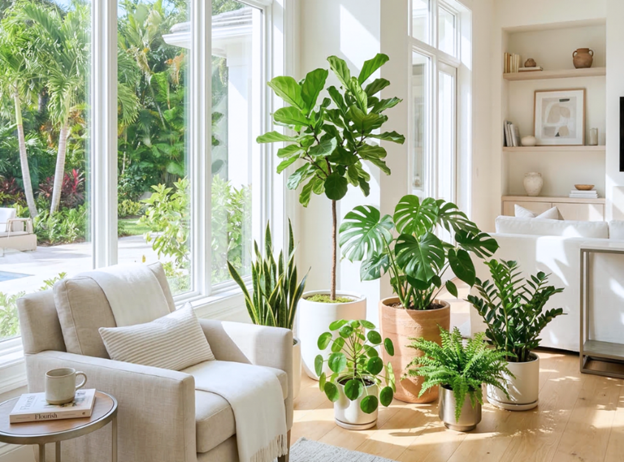
Plants should never feel like an afterthought. When I incorporate greenery into a design plan, I treat plants as part of the overall composition of the room.
In a living room interior, I usually create a mix of heights and textures rather than placing a single plant in the corner.
For example:
• A tall snake plant near a window
• A pothos trailing from a shelf or console
• A peace lily placed on a coffee table or side table
Grouping plants in odd numbers often creates the most natural visual balance.
Another design tip I always follow is choosing the right planters. Because indoor plants Florida humidity conditions can produce excess moisture, I use ceramic planters with proper drainage trays underneath.
This protects hardwood floors, rugs, and furniture surfaces from water damage.
Over time, these small design choices create a room that feels alive, fresh, and connected to nature.
What You Can Do Right Now
If you want to introduce greenery into your home, start small.
Choose one or two plants that thrive in tropical, humid indoor conditions and place them where they receive indirect light.
For most homes, I recommend starting with the classic combination of pothos snake plant peace lily. These plants are incredibly resilient and adapt well to Florida interiors.
Once you see how well they grow, you can gradually expand your collection.
Adding greenery also enhances the atmosphere of a living room interior, making it feel calmer and more inviting.
Plants soften hard surfaces, add organic texture, and improve the overall comfort of the space.
Related Design Tips I Recommend
Indoor plants are one part of creating a healthier living environment. I also encourage homeowners to think about ventilation, natural airflow, and indoor air quality when designing their homes.
Another helpful strategy is air quality enhancement, which focuses on improving ventilation and reducing airborne pollutants.
(Insert internal link here once the related article is published.)
When plants, airflow, and thoughtful design come together, your home becomes both beautiful and healthier to live in.
If you would like help choosing the right plants for your home or incorporating greenery into your design plan, I would be happy to guide you. Schedule a free consultation and let us talk about how we can create a healthier, more beautiful Florida living space together:
FAQs
What are the best indoor plants for Florida humidity?
In my experience, pothos, snake plants, and peace lilies perform best in Florida homes. These plants thrive in humid environments and adapt well to indoor lighting conditions.
Do indoor plants really improve air quality?
Yes. Many air-purifying plants in Florida home environments benefit from helping remove airborne toxins while increasing oxygen levels indoors.
Why do succulents struggle indoors in Florida?
Succulents evolved in dry climates. Florida’s humidity can cause excess moisture in the soil, which leads to root rot.
Where should plants be placed in the living room?
I recommend placing plants where they receive indirect natural light but are protected from direct air-conditioning vents. Proper placement helps plants thrive while enhancing the living room interior design.
What makes tropical plants better for Florida homes?
Plants that evolved in humid climates naturally adapt well to Florida conditions. That is why tropical houseplants that prefer high-humidity environments tend to thrive indoors here.