
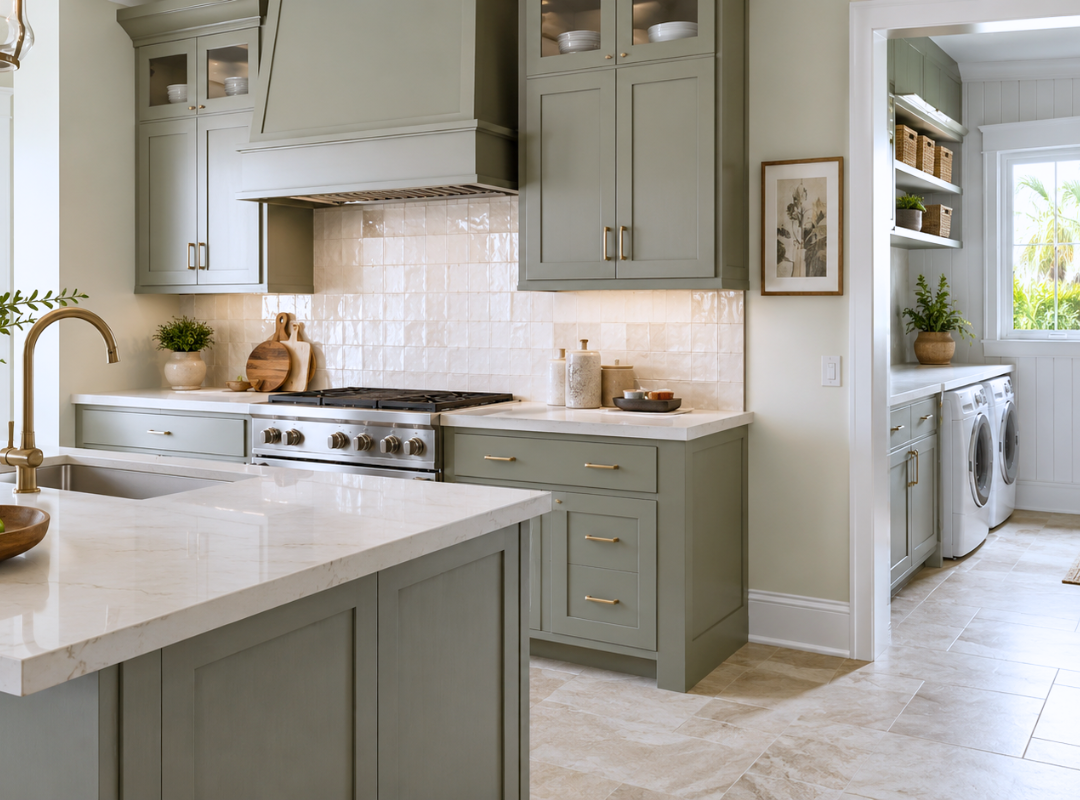
Design Surfaces | How to Choose the Right Tile and Stone for Every Room in Your Florida Home
Design surfaces — the tile and stone you choose for your floors, walls, countertops, and feature areas — are the most permanent and consequential decisions in any home interior. In Florida homes, where heat, humidity, and intense sunlight are constants, those choices carry practical weight as well as aesthetic impact. Get them right and they anchor every room for decades. Get them wrong and no amount of clever styling will fix it.
What Are Design Surfaces and Why Do Tile and Stone Choices Define a Florida Interior?
Design surfaces is the term used for the hard material finishes applied to the primary planes of a room — floors, walls, countertops, splashbacks, shower enclosures, and architectural feature areas. Tile and stone are the two dominant categories. Together they determine more of a room’s character than any other material decision, because they cover more area, they last longer, and they are the hardest to change once installed.
In Florida homes, the case for investing in high-quality tile and stone surfaces is particularly strong. The state’s climate creates conditions that are genuinely hostile to poor material choices. Humidity causes timber and laminate surfaces to swell, warp, and delaminate over time. Heat cycling — the daily shift between Florida’s outdoor temperatures and air-conditioned interiors — stresses adhesive bonds and grout joints in lower-quality tile installations. Intense UV light through large windows bleaches and fades synthetic surface materials. Natural stone and correctly specified porcelain tile are largely immune to all of these problems.
The aesthetic case is equally strong. Natural stone brings a material depth, tonal variation, and physical presence that no manufactured surface can replicate. A marble countertop, a travertine floor, a slate feature wall — each of these is unique, shaped by geological processes over millions of years. That authenticity is the quality that makes stone surfaces the centrepiece of the best Florida interiors, from modest bathroom renovations to whole-home remodels. It is also why Marilou sources and specifies stone in person for every Stones Design LLC project — because sample chips and digital images do not reveal how a material will actually read in a real room.
Tile, when well chosen, carries its own design authority. Large-format porcelain panels in a stone-look finish can achieve a level of visual continuity across a floor that individual stone tiles cannot. Handmade ceramic and zellige tiles bring artisanal texture and tonal variation that suits bathrooms, kitchen splashbacks, and feature walls. Mosaic and encaustic tiles create pattern and surface interest at a smaller scale. The skill is matching the tile type and format to the specific role it plays in the room.
How Do You Choose the Right Stone Surface for Kitchen Countertops and Islands?
The kitchen countertop is the single most used hard surface in any home. In Florida, where kitchens tend to be large, open, and central to daily living, it is also the surface with the greatest visual impact. Choosing the right stone for a kitchen countertop means balancing three things simultaneously: aesthetic character, practical performance, and how the stone will relate to the surrounding cabinetry, flooring, and hardware.
Quartz engineered stone is the most practical countertop choice for a busy Florida kitchen. It is non-porous, requires no sealing, resists staining from the citrus, vinegar, and acidic foods that are staples of Florida cooking, and holds up well to the humidity levels typical of Central Florida homes. The trade-off is that quartz patterns are manufactured rather than natural — they are consistent, which some homeowners prefer, but they lack the tonal depth and uniqueness of a natural stone slab.
Granite offers the closest to quartz in terms of durability while delivering genuine natural stone character. It is one of the hardest natural stones, highly heat-resistant, and available in an enormous range of tones from pale cream and warm beige to deep charcoal and near-black. A sealed granite countertop in a Florida kitchen is a genuinely long-term investment — I have seen original granite surfaces in Orlando homes that are 25 years old and still performing beautifully with nothing more than periodic resealing.
Marble is the most visually dramatic stone countertop choice and, for the right client, absolutely worth the care it requires. Calacatta and Carrara marble — white or cream grounds with grey or gold veining — create a kitchen centrepiece that no other material achieves. In a Florida kitchen, marble countertops require sealing on installation, resealing annually, and careful management of acidic foods and liquids. For clients who understand and accept that maintenance commitment, marble delivers a level of beauty and material prestige that justifies every bit of it.
Which Tile and Stone Options Work Best for Florida Bathroom Design?
Florida bathrooms present the most demanding environment for tile and stone selection in the whole home. High humidity, regular moisture exposure, temperature variation between the shower and the air-conditioned room, and the safety requirement for non-slip floor surfaces all need to be factored into every material decision.
For bathroom floors, large-format tiles in a honed, matte, or textured finish are the most practical and visually effective choice. Large format — 600mm x 600mm or larger — minimises grout lines, which reduces both the visual busyness of the floor plane and the maintenance burden of keeping grout clean in a humid bathroom environment. Honed natural stone — limestone, travertine, slate, and granite — and matte porcelain both provide adequate grip when wet. Polished stone on a bathroom floor is beautiful but presents a slip risk when wet and is not a finish I recommend for primary bathrooms in family homes.
Bathroom walls and shower enclosures offer more creative latitude. Full-height stone panels — a single slab of marble or quartzite covering the entire shower wall from floor to ceiling — are one of the most architecturally powerful moves available in a bathroom design. They create a sense of material continuity and luxury that tiled surfaces rarely achieve. For bathrooms where full stone panels are not within budget, large-format stone-effect porcelain achieves a similar visual result at a significantly lower cost.
Vanity countertops in a Florida bathroom benefit from the same stone options as kitchen countertops, with an additional consideration: water pooling. Polished stone surfaces on bathroom vanities show water marks and mineral deposits more readily than honed or leathered finishes. In Central Florida, where hard water is common, a honed or leathered stone finish on the vanity countertop is a practical choice that also happens to look extremely refined. It resists water marking, has a tactile surface quality that polished stone lacks, and ages gracefully in the humid bathroom environment.
Stone and tile selection for kitchens and bathrooms is where Stones Design LLC’s combination of interior design expertise and specialist stone knowledge delivers the most value. Marilou sources and specifies every surface in person — because the right material for your specific home, light, and lifestyle cannot be chosen from a catalogue. Visit our natural stone and countertop services to find out how we work, or call 407-808-4011 to book a free consultation.
How Do You Select Floor Tile and Stone That Performs in Florida’s Climate?
Flooring is the largest continuous surface in any room and the one that most determines how the space feels underfoot and reads visually. In Florida, floor material selection carries climate-specific requirements that are not relevant in most other US states — and getting them right is the difference between a floor that performs beautifully for 30 years and one that needs replacement within a decade.
The two most important performance requirements for Florida floor surfaces are moisture resistance and thermal stability. Fully vitrified porcelain tile — fired at high temperature to achieve near-zero water absorption — is the benchmark for moisture resistance and is the most widely used floor material in Central Florida homes for good reason. It does not swell, warp, crack, or support mould growth in the way that more porous materials do. Large-format vitrified porcelain in a stone or concrete-look finish delivers excellent practical performance while maintaining a high-quality interior aesthetic.
Natural stone flooring requires more careful specification in Florida but is absolutely achievable when correctly selected and installed. Granite and quartzite are the densest and most moisture-resistant natural stones and are well-suited to Florida floor applications. Travertine and limestone are popular choices in Florida homes for their warm, organic appearance and their thermal mass — they stay cool underfoot in warm weather — but they require more rigorous sealing and maintenance than denser stones. All natural stone floors in Florida should be sealed professionally on installation and resealed every one to three years depending on traffic levels and stone type.
Continuity of flooring material across connected spaces is one of the most impactful design decisions in an open floor plan Florida home. Running the same tile or stone through the living area, kitchen, dining room, and entry hall eliminates the visual interruptions that multiple flooring changes create and makes the overall floor plan feel significantly larger and more cohesive. This is a decision I discuss with every client at the beginning of a project — because it is far simpler to specify consistent flooring before installation than to try to match materials after different rooms have been tiled separately.
How Does an Interior Designer Approach Tile and Stone Selection for a Whole Home?
Selecting tile and stone for a whole home is a process of building a material palette — a coordinated family of surfaces that share a tonal relationship and work together across every room without competing or clashing. It is a discipline that requires both aesthetic judgement and material knowledge, and it is one of the areas where professional design input consistently delivers the most measurable return.
The process begins with the primary floor material, because it covers the most area and carries the most visual weight. Once the floor material is confirmed, the countertop stone is selected to complement it — not to match it exactly, but to share a tonal relationship that reads as intentional. Wall tiles and feature surfaces are then chosen to work within the palette established by those two anchor materials. This sequence ensures that every material choice is made in context rather than in isolation, which is how surface selections that look individually appealing end up clashing when installed together.
Sourcing stone in person is non-negotiable for a high-quality result. Natural stone slabs vary significantly even within the same quarry batch — the sample in a showroom is indicative, not representative of the specific slab that will be cut and installed in your home. For every stone countertop and feature surface in a Stones Design LLC project, Marilou visits the stone supplier’s yard to select specific slabs. This is the step that accounts for the difference between a surface that is ‘nice’ and one that is genuinely exceptional — because the variation within natural stone is one of its greatest qualities, and selecting for that variation rather than against it is a skill developed through years of project experience.
The final stage of a whole-home tile and stone specification is coordinating the installation sequence and grout selections. Grout colour has a disproportionate impact on the finished appearance of any tiled surface. A near-matching grout minimises grout lines and allows the tile or stone to read as a continuous surface. A contrasting grout emphasises the pattern and individual tile format. Neither is inherently right or wrong — but the choice should be made deliberately, with a sample installed in the actual room before the full installation proceeds. This is a detail that is easy to overlook and difficult to correct once the grout has cured.
Frequently Asked Questions About Design Surfaces, Tile and Stone
What is the difference between porcelain tile and natural stone for home interiors?
Porcelain tile is a manufactured, kiln-fired ceramic product engineered for consistency, low porosity, and durability. Natural stone — granite, marble, quartzite, travertine, and slate — is quarried directly from the earth, making every slab and tile unique in pattern and tone. Porcelain offers predictability and low maintenance; natural stone offers authenticity, material depth, and a character that improves with age. In Florida homes, both perform well when correctly specified for their location and application.
Which stone countertop material is most durable for a Florida kitchen?
Quartz engineered stone is the most durable and lowest-maintenance countertop choice for a busy Florida kitchen. It is non-porous, requires no sealing, resists staining from citrus and acidic foods, and holds up well under the humidity levels typical of Central Florida homes. Granite is a strong second choice — harder than most stones, highly heat-resistant, and available in a wide range of tones. Marble is the most visually dramatic option but requires regular sealing and more careful maintenance in a high-use kitchen environment.
What tile size works best for Florida bathroom floors?
Large-format tiles — 600mm x 600mm or larger — work best on Florida bathroom floors because they minimise grout lines, which reduces both visual busyness and the maintenance burden of cleaning grout in a humid environment. Fewer grout lines also make the floor plane feel more expansive, which benefits smaller bathrooms. The tile surface finish matters as much as size: honed, matte, or textured finishes provide adequate grip when wet, which is essential in a Florida bathroom where the floor is regularly exposed to moisture.
How do you prevent natural stone floors from being damaged by Florida’s humidity?
Natural stone floors in Florida require three things to perform well long-term: correct species selection, professional installation with appropriate substrate and waterproofing, and regular sealing. Denser stones — granite, quartzite, and slate — are more resistant to moisture absorption than softer stones like travertine and limestone. All natural stone floors in Florida should be sealed on installation and resealed every one to three years depending on traffic and stone type. Consistent indoor climate control, particularly air conditioning, also significantly reduces humidity-related stress on stone floors.
How do you coordinate tile and stone selections across different rooms in a Florida home?
Coordinating tile and stone across a Florida home starts with establishing a consistent material palette — two or three stones or tile families that share a tonal relationship and work together without competing. The floor material typically carries the most visual weight, so it is specified first and other surfaces are chosen to complement it. In open floor plans, using the same or related flooring material throughout connected spaces creates continuity and makes the home feel larger and more cohesive. Transitions between different materials should be planned at doorways or natural breaks in the floor plan, not mid-room.
Ready to choose tile and stone surfaces that will define your Florida home for decades? Stones Design LLC’s natural stone and design surfaces service covers material selection, sourcing, specification, and installation management for kitchens, bathrooms, and whole-home projects across Central Florida. Book a free consultation and let Marilou guide every surface decision from brief to beautiful finish — call 407-808-4011.