
How to design built-in storage for beach gear and seasonal items in a Florida home?
By Marilou Stones — Award-winning Interior Designer, Orlando FL.
Best Interior Designer — Winter Garden Magazine 2024. Good Stuff Awards 2024. Contributing designer on the 2025 Parade of Homes Realtors’ Favorite home (builder team recognition).
Design built-in storage for Florida homes by creating a mudroom-style entry zone with ventilated cubbies, moisture-resistant cabinetry, and dedicated zones for beach gear and seasonal items. Use materials like PVC or marine grade plywood and include airflow features to prevent mildew while keeping daily clutter contained and organized.
The real storage problem in Florida homes
In Central Florida, the challenge is not how much storage you have – it is whether that storage works for your lifestyle.
Standard closets were not designed for wet towels, sandy bags, pool floats, or oversized holiday décor. They trap moisture, hold heat, and quickly become clutter zones. That is why I approach built-in storage for Florida homes very differently than I would in any other climate.
Humidity changes everything. Materials expand, fabrics retain moisture, and enclosed spaces can develop odor or mildew faster than most homeowners expect. At the same time, many homes lack a proper transition zone between outdoors and indoors.
That is when the real issues start—sand travel into living areas; damp items end up on furniture, and seasonal décor gets pushed into overheated garages.
The solution is not more storage. It is a smarter placement and better material choices.
My mudroom design strategy for coastal Florida homes
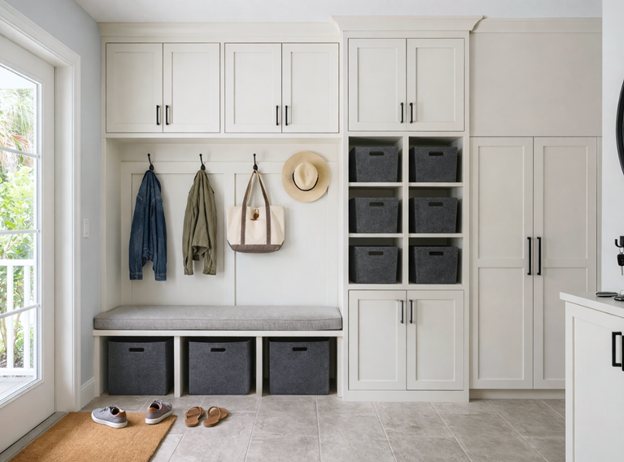
The most effective solution I design is a compact, high-functioning mudroom design zone near the entry.
Even in homes without a dedicated mudroom, I create a built-in wall system near the garage entry or main hallway. This becomes the control point for daily movement in and out of the house.
A well-designed layout typically includes:
- Ventilated cubbies for beach bags
- Stainless hooks for towels and hats
- A pull-out drying rack
- A lift-up bench for hidden storage
- Upper cabinets for rotating décor
These elements work together to support both daily use and long-term organization.
For durability, I specify materials like PVC cabinetry or marine-grade plywood. These outperform standard MDF in humid environments and maintain their structure over time.
A strong beach gear storage design also prioritizes airflow. I often integrate slatted backing or hidden ventilation channels, so damp items dry properly instead of creating odor or mold.
Lighting is another detail that makes a difference. Integrated LED strips under cabinetry improve visibility and make early-morning routines more efficient.
This is where thoughtful seasonal storage solutions start to elevate how a home functions.
Where this works best in real Florida homes
Across Central Florida, I have seen the same pattern repeat: families struggle not because they lack storage, but because their storage is not aligned with how they live.
In one recent project, a homeowner had plenty of garage space but nowhere practical for everyday beach essentials. Towels, flip-flops, and bags constantly migrated into the kitchen and living areas.
Instead of adding another closet, I designed a 6-foot entry system with ventilated cubbies, concealed bench storage, and overhead cabinets sized for seasonal bins.
The transformation was not just visual—it changed how the household moved through space every day.
That is the impact of well-planned built-in storage for Florida homes. It removes friction and simplifies routines.
The same approach works just as well for sports gear, school items, or even hurricane preparation kits. The principle stays consistent: create a defined landing zone that supports real life.
Simple upgrades you can start using right now
If a full renovation is not on your radar yet, there are still ways to improve your storage immediately.
Start with these three upgrades:
1. Add wall-mounted hooks near your entry
They keep wet or sandy items off furniture and floors.
2. Switch to ventilated shelving systems
Airflow is essential in humid climates and helps prevent odor buildup.
3. Upgrade to sealed storage bins
Gasket-sealed containers protect seasonal décor from humidity and temperature swings.
If you have space, a shallow bench cabinet (16–18 inches deep) can dramatically improve organization. It is one of the most effective seasonal storage solutions I recommend for everyday use.
For long-term results, working with a home interior designer ensures these elements are built into your layout—not added as an afterthought.
Designing for long-term performance in Florida
The most successful storage strategies connect multiple areas of the home.
Entry storage should work alongside garage systems, closet organization, and seasonal rotation zones. When everything is aligned, your home supports your routine instead of working against it.
Material selection is critical. So is ventilation. So is the placement.
When these decisions are made early, storage becomes effortless—and that is when a home truly feels organized.
Ready to improve how your home functions?
If your entry space feels more like a drop zone than a transition space, it is time to rethink how it works.
I design storage systems tailored specifically for Florida living—so they hold up to humidity, daily use, and seasonal changes.
Share a few photos of your space, and I will recommend practical, design-forward solutions that fit your home:
FAQs
What materials are best for built-in storage in Florida homes?
Moisture-resistant materials perform best, including marine-grade plywood, PVC cabinetry, and engineered panels designed for humid environments. These prevent swelling, warping, and long-term damage.
Where should beach gear be stored in a Florida home?
A dedicated entry or mudroom zone near the garage or main hallway works best. A well-planned beach gear storage design keeps sand and moisture contained while improving daily organization.
Can small homes still include mudroom design features?
Yes. Even a 4–6-foot wall can function as a mudroom design zone with hooks, cubbies, and a compact bench. It is one of the most efficient ways to improve storage in smaller homes.
How do seasonal storage solutions prevent damage in Florida?
Effective seasonal storage solutions use ventilated cabinetry, sealed containers, and moisture-resistant materials to protect items from heat, humidity, and mold.
When should I hire a home interior designer for storage planning?
It is best to involve a home interior designer early in the design or renovation process. This ensures storage is integrated into the layout rather than added later, resulting in a more functional and cohesive space.