
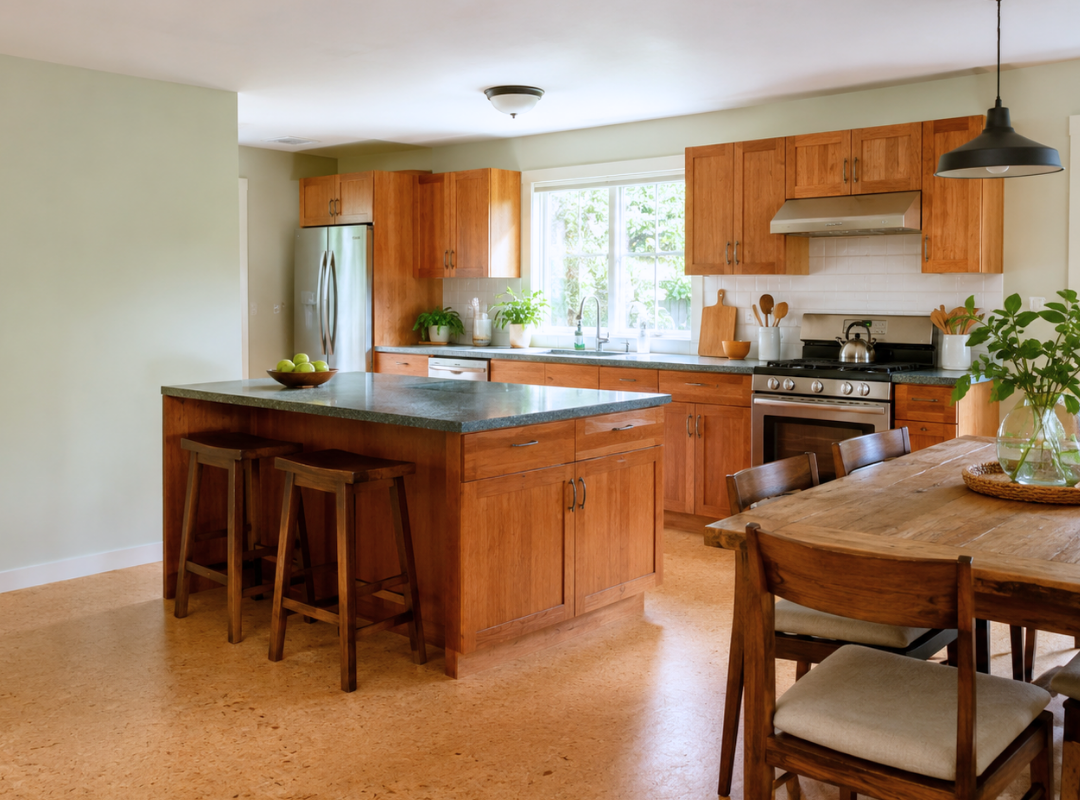
The Best Materials for Sustainable Interiors
The best materials for sustainable interiors are reclaimed and FSC-certified wood, bamboo, cork, natural stone, recycled glass and metal, low-VOC finishes, and natural-fibre textiles. In Florida, the best choice also has to survive heat, humidity, and salt air — so durability matters as much as the eco-credentials.
What are the best materials for sustainable interiors?
The best materials for sustainable interiors are reclaimed and FSC-certified wood, bamboo, cork, natural stone, recycled glass and metal, low-VOC finishes, and natural-fibre textiles. Each earns its place differently — here is what they are, where they work, and roughly what they cost.
| Material | Why it’s sustainable | Where it works | Rough cost |
| Reclaimed / FSC-certified wood | Reuses existing timber or comes from responsibly managed forests | Flooring, beams, feature walls — sealed for humid rooms | $8–$15 / sq ft |
| Bamboo | Fast-growing grass that regrows in 3–5 years, not decades | Flooring and cabinetry; handles humidity well | $3–$9 / sq ft |
| Cork | Harvested from bark without felling the tree | Flooring and walls; naturally mould- and moisture-resistant | $3–$8 / sq ft |
| Natural stone | Long lifespan, locally sourced options, fully recyclable | Countertops and floors; sealed stone suits Florida well | $50–$120 / sq ft installed |
| Recycled glass surfaces | Made from post-consumer glass that would otherwise be waste | Countertops, tiles, backsplashes | $60–$130 / sq ft |
| Low-VOC finishes | Cut indoor air pollutants from paints and sealers | Walls and woodwork throughout the home | $40–$70 / gallon |
| Natural-fibre textiles | Wool, organic cotton, jute and linen are renewable and biodegradable | Upholstery, rugs and drapery | Varies by fabric |
The “best” material is never one-size-fits-all. It depends on the room, how the space is used, your budget, and — in Florida — the climate the material has to live in.
What makes a material genuinely sustainable?
A material is genuinely sustainable when it is renewable, responsibly sourced, low in harmful emissions, and durable enough to avoid early replacement. Durability is the part most people miss — a material that needs replacing in five years is rarely the greener choice.
Watch for greenwashing. A “natural” label means little without proof: look for FSC certification on wood, recycled-content percentages on surfaces, and low- or zero-VOC ratings on paints and sealers.
The greenest material is often the one you do not have to replace. Longevity, repairability, and how a material is disposed of at end of life all count as much as where it came from.
Which sustainable materials work best in Florida’s climate?
In Florida, the sustainable materials that perform best are sealed natural stone, bamboo, cork, and properly treated reclaimed wood — all of which resist heat and humidity. Anything prone to swelling or mould needs careful sealing in a coastal climate.
Humidity is the deciding factor. Cork and bamboo handle moisture well, sealed stone is nearly impervious, and treated reclaimed wood holds up — but untreated softwoods and some natural fibres can warp, mould, or fade.
Near the coast, salt air adds another test. Choose corrosion-resistant fixtures, UV-stable textiles, and finishes rated for high humidity so the eco-friendly choice also lasts.
Choosing materials that are both sustainable and right for Florida’s climate is exactly where a designer earns their keep. At Stones Design LLC, Marilou specifies materials that look beautiful and hold up in the heat and humidity. See our interior design services or book a free consultation — call us on 407-808-4011.
How much do sustainable materials cost?
Sustainable materials range from budget-friendly to premium. Cork and bamboo flooring start around $3 a square foot, recycled-glass and stone surfaces run $50 to $130 installed, and reclaimed wood sits at $8 to $15 a square foot depending on source.
Some carry a premium up front, but durability often pays it back — a floor that lasts decades costs less over time than one replaced twice. A designer can balance higher-cost statement materials against affordable workhorse ones across the project.
Costs also depend on the wider project. If you are budgeting a full renovation, it helps to understand how design fees fit in alongside materials before you commit.
Are sustainable materials worth it in the long run?
Yes — sustainable materials are usually worth it in the long run, because the durable ones outlast cheaper conventional options and reduce replacement cost and waste. In a humid climate, materials that resist moisture and mould also mean fewer repairs.
There is a comfort and health payoff too. Low-VOC finishes and natural fibres improve indoor air quality, which matters in homes that stay closed up and air-conditioned for much of the Florida year.
The honest answer: choose for performance first, eco-credentials second, and you usually get both. A material that lasts and performs in your climate is, by definition, the more sustainable one.
If you are pricing a project, it helps to read up on what an interior designer costs alongside the materials — and for surfaces specifically, our guide to eco-friendly natural stone shows how a sustainable choice can also be the most beautiful one.
Frequently Asked Questions About Sustainable Interior Materials
What are the best materials for sustainable interiors?
The best materials for sustainable interiors are reclaimed and FSC-certified wood, natural stone, recycled glass and metal, bamboo, cork, low-VOC finishes, and natural-fibre textiles. The right one depends on the room, the climate, and the budget — there is no single best choice for every space.
Which sustainable materials work best in Florida?
Materials that resist humidity and heat work best in Florida — sealed natural stone, bamboo, cork, and properly treated reclaimed wood. Anything prone to swelling or mould, such as untreated softwood, needs careful sealing in a coastal climate to last.
Are sustainable materials more expensive?
Some carry a premium, but many — like cork, bamboo, and recycled surfaces — are competitively priced, and the durability often pays back over time. Cork and bamboo flooring start around $3 a square foot, while a designer can balance costs across the whole project.
What makes a material sustainable?
A material is sustainable when it is renewable, responsibly sourced, low in harmful emissions, and durable enough to avoid early replacement. Look for FSC certification on wood, recycled-content percentages on surfaces, and low-VOC ratings on paints to avoid greenwashing.
Do sustainable materials last as long as conventional ones?
Often longer. Natural stone, sealed reclaimed wood, cork, and bamboo are highly durable, and many outlast cheaper conventional materials. In Florida’s humid climate, choosing moisture- and mould-resistant materials is the key to making them last for decades.
Build a Home That Lasts in Florida’s Climate
Ready for a home that’s beautiful and built to last in Florida’s heat and humidity? At Stones Design LLC, every material is chosen to perform — not just to look good in photos. Explore our interior design services, then book a free consultation and let’s plan a space that lasts. Call 407-808-4011 — we’ll make sure your home reflects who you are and stands up to the climate it lives in.