

What paint colors make a Florida home feel cooler and more spacious?
By Marilou Stones — Award-winning Interior Designer, Orlando FL. Best Interior Designer — Winter Garden Magazine 2024. Good Stuff Awards 2024. Parade of Homes Realtors Favorite 2025.
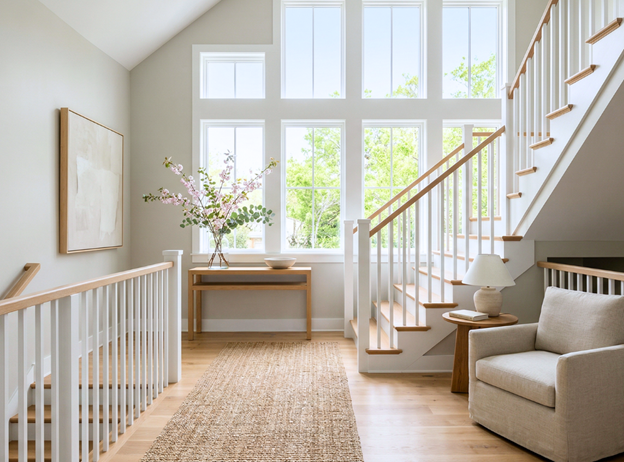
Whites with blue or green undertones — like Benjamin Moore’s Chantilly Lace or Sherwin-Williams Sea Salt — reflect light and visually lower the perceived temperature of a room. Avoid warm yellows and reds, which amplify the feeling of heat. Pair cool wall tones with warm wood accents to keep Florida rooms feeling fresh without being cold.
The Florida problem with cool paint colors Florida home interiors
If you live in Central Florida, you already know how quickly a room can feel warmer than it is. I see it all the time in Orlando living rooms where clients have beautiful natural light, but the wrong wall color makes the entire space feel smaller and hotter.
Paint color directly affects how temperature is perceived. In a Florida home, warm undertones bounce sunlight differently than cool ones. Yellows, gold, terracotta, and creamy beiges can make a room feel heavy by mid-afternoon, especially in west-facing living spaces.
That is why choosing the right cool paint colors for a Florida home interior is not just cosmetic—it is functional.
In many Florida homes I walk into, the ceiling height is already generous, and the windows are large. But the wrong best wall colors Florida homeowners choose to undo those advantages instantly. The space looks tighter. The air feels still. Even the flooring appears darker.
When I refine the color palette in Florida interior spaces, the transformation is immediate. The same furniture suddenly feels lighter; the windows appear larger, and the entire room becomes noticeably calmer.
And in a living room design and decoration plan for Florida, that shift matters every single day of the year.
My recommendation for the best wall colors Florida living spaces need
I specify cool undertone neutrals for every living room design and decoration project I do in Central Florida unless the architecture clearly calls for something different.
My go-to starting palette includes:
- Benjamin Moore Chantilly Lace OC-65
- Sherwin-Williams Sea Salt SW 6204
- Benjamin Moore White Dove OC-17
- Sherwin-Williams Passive SW 7064
- Benjamin Moore Pale Oak OC-20
These are reliable cool paint colors that Florida home interiors handle beautifully in bright sun.
Chantilly Lace reflects light cleanly without turning yellow. Sea Salt introduces a soft green-blue shift that visually lowers perceived temperature. Passive creates a subtle grey wash that makes ceilings feel taller.
I avoid creamy whites with strong yellow bases in Florida living rooms. They trap warmth visually. Even when the AC is working perfectly, the room still feels hotter.
The key to a successful Florida interior color palette is balanced contrast. I always pair cool wall colors with warm elements like white oak floors, walnut furniture, or brushed brass lighting. That keeps the space from feeling sterile.
Here is how I guide homeowners through selecting cool paint colors Florida home interiors will benefit from most:
Start by identifying your light direction. East-facing rooms handle Sea Salt beautifully. West-facing rooms usually need a cleaner white like Chantilly Lace.
Next, check your flooring undertone. Grey floors need warmer cool neutrals like Pale Oak. Warm oak floors work better with Passive or White Dove.
Then test paint at three different wall heights. Florida daylight shifts quickly. A color that looks perfect at 9 AM can feel completely different at 4 PM.
That is the step most homeowners skip—and it is why they repaint later.
Where I have seen this work across Central Florida homes
With over 30 years of experience, I have refined how cool paint colors for Florida homes perform under humidity, intense daylight, and reflective surfaces.
In Winter Garden, I recently helped a homeowner adjust a living room that felt smaller than it was. The architecture was strong. Twelve-foot ceilings. Large windows. Neutral tile floors. But the walls were painted with a warm beige that absorbed too much light.
Instead of replacing furniture or changing the layout, I refined the color palette for this Florida interior using Benjamin Moore Chantilly Lace and added white oak floating shelves.
The result was immediate. The ceiling appeared higher. The room felt cooler in the afternoon. Even the existing sofa looked newer.
I see the same improvement repeatedly across Orlando, Windermere, and Lake Nona homes. When you choose the best wall colors Florida interiors call for, the architecture finally performs the way it was designed to.
And that is the difference between decorating and designing.
What you can do now for better living room design and decoration results
If your living room feels visually warm or smaller than it should, start with paint before replacing anything else.
Here is exactly what I recommend doing first:
Test Sherwin-Williams Sea Salt on one main wall if your room faces east or north.
Test Benjamin Moore Chantilly Lace if your space faces west or south.
Use satin finish instead of flat in Florida living rooms. It reflects light better without glare.
Keep ceilings the same color as walls in smaller spaces. That instantly increases perceived height.
Avoid accent walls in warm tones unless your room has strong cross-ventilation and shaded windows.
These adjustments alone can dramatically improve how cool paint colors perform in a Florida home under real-life conditions.
For most homeowners, repainting costs between $1.50 and $4.00 per square foot depending on preparation needs. That is one of the most affordable upgrades you can make to improve both comfort and visual space.
A thoughtful living room design and decoration plan always starts with light behaviour first, not furniture.
Related design considerations that affect Florida living room comfort
Paint color is only one part of how a Florida living space stays visually cool.
If your lighting temperature is too warm, even the best cool paint colors for a Florida home will not look their best. I often adjust LED bulbs to 3000K or 3500K to maintain a balanced, true-to-color finish.
Window treatments matter too. Sheer linen panels soften glare without trapping heat the way heavier fabrics do.
And if you are planning bedroom updates next, understanding how color psychology shifts between living and sleeping spaces makes a big difference. I have written separately about how cooling color schemes affect relaxation differently at night than they do in shared daytime rooms.
When these layers work together, your Florida interior color palette feels cohesive throughout the home—instead of relying on room-by-room guesswork.
If your living room still feels warm after repainting, or if you are not sure which undertones your space needs, I am happy to help you evaluate it properly. The right color selection can change how your entire Florida home feels to live in.
Marilou Stones is an award-winning interior designer in Florida who understands how the right color selection can completely transform how your home feels to live in.
Start the conversation and share your space here:
https://www.stonesdesignllc.com/contact/
FAQs
What are the best cool paint colors Florida home interiors should use in living rooms?
I recommend starting with Benjamin Moore Chantilly Lace or Sherwin-Williams Sea Salt. In my experience designing Central Florida homes, these reflect daylight well and make rooms feel larger and cooler without looking stark.
Do cool paint colors really make a Florida room feel less hot?
Yes. I see this effect constantly in Orlando homes. Cool undertone paint reflects light differently than warm tones, which lowers the perceived temperature of a space even when the thermostat stays the same.
Are white walls always the best wall colors Florida homeowners should choose?
Not always. I choose whites with blue or green undertones, not yellow bases. The right white works beautifully in a Florida home, but the wrong one can make a living room feel warmer.
What color palette Florida interior designers use for small living rooms?
I typically combine Chantilly Lace walls, soft grey textiles, and light wood accents. This combination increases visual depth and improves how natural light moves through space.
How do your awards and experience influence your color choices for Florida homes?
After more than 30 years designing Central Florida interiors—and being recognized by Winter Garden Magazine, the Good Stuff Awards, and the Parade of Homes—I rely on tested palettes that perform in real Florida daylight, not showroom lighting.