

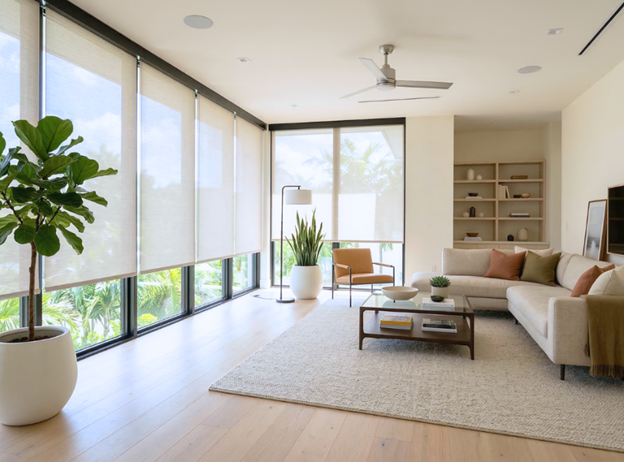
UV-Filtering Window Treatments | How to Block Florida’s Heat Through Windows Without Losing Natural Light
By Marilou Stones — Award-winning Interior Designer, Orlando FL
Best Interior Designer — Winter Garden’s Local Magazine Best of the Best Readers’ Choice Awards 2024
Recognized at the Good Stuff Awards 2024
Part of the award-winning team — 2025 Lake-Sumter Parade of Homes Awards Banquet
Quick Answer
Install dual-layer window treatments — a sheer UV-filtering roller shade behind a decorative curtain panel. The sheer blocks up to 90% of UV rays and solar heat while still flooding the room with diffused light. Marilou recommends Phifer SheerWeave or Hunter Douglas Silhouette for Florida homes where light control and heat reduction need to work together.
Introduction
One of the most common complaints I hear from homeowners across Central Florida is this: their rooms feel bright and beautiful during the day — but they also feel hot. Large windows bring wonderful daylight, yet they can also bring in intense solar heat.
That is why I often recommend UV-filtering window treatments Florida homeowners can use to control heat without darkening their homes.
Florida architecture celebrates natural light. Expansive windows, sliding doors, and open living spaces are designed to connect to indoor and outdoor environments. But when the sun pours directly into a room for hours, it can quickly raise indoor temperatures and fade furnishings.
The key is not blocking light entirely. Instead, the goal is to control how sunlight enters the room. With the right window treatments, you can dramatically reduce heat gain while still enjoying bright, comfortable interiors.
In this guide, I will show you the window treatment strategy I recommend most often to homeowners who want cooler spaces without sacrificing the natural light that makes Florida homes so beautiful.
The Problem I See in Many Florida Homes
Florida homes are often designed with large windows facing east or west to capture daylight throughout the day. While this creates bright interiors, it also introduces intense solar exposure.
When sunlight enters directly through glass, it creates what is known as solar heat gain. In Florida, heat gain can significantly increase indoor temperatures, especially during the summer months.
Without proper window coverings, sunlight can:
• Raise indoor temperatures by several degrees
• Increase air-conditioning usage
• Cause glare on screens and televisions
• Fade fabrics, flooring, and furniture finishes
Many homeowners try solving the problem by installing heavy blackout curtains or dark blinds. While those options block heat, they also eliminate the natural daylight that makes living spaces feel open and inviting.
That is why I prefer using solar heat to reduce blinds and layered window treatments instead. The goal is to soften sunlight rather than eliminate it completely.
In my experience working with homeowners across Central Florida, the best window shades Florida homes can use are those designed to filter sunlight before it fully enters the room. These solutions maintain brightness while significantly reducing solar heat.
This approach supports what I call natural light window treatments — designs that manage sunlight rather than blocking it entirely.
For anyone investing in home improvement in Florida, this is one of the most effective upgrades you can make for comfort and energy efficiency.
My Go-To Window Treatment Strategy
When I design living spaces with large windows, I always recommend a layered window treatment system.
This approach combines two elements:
• A UV-filtering shade
• A decorative curtain panel
Together, they create flexible light control while reducing solar heat.
Step 1: Install UV-Filtering Roller Shades
The first layer is the most important. I install a sheer roller shade that filters sunlight before it enters the room.
Two of my most trusted products are:
• Phifer SheerWeave solar fabrics
• Hunter Douglas Silhouette shades
These materials are specifically designed for UV-filtering window treatments Florida homes need to reduce heat without darkening the room.
Depending on the fabric openness factor, these shades can block up to 90% of UV radiation and solar heat.
The result is diffused daylight rather than harsh direct sun.
Step 2: Add Decorative Curtain Panels
The second layer adds softness and flexibility. I often install light linen or textured drapery panels alongside the roller shades.
These panels allow homeowners to:
• frame the windows beautifully
• add warmth and texture to the room
• close the curtains during the hottest part of the day if needed
This layered approach creates what I consider the ideal balance between comfort and design.
It is one of the most reliable natural light window treatment strategies I use when designing living spaces throughout Central Florida.
Where I’ve Seen This Work Across Florida Homes
Over the years, I have specified this window treatment approach in dozens of homes across Central Florida, particularly in living rooms and family rooms with large sliding doors or expansive windows.
These spaces often receive the most sunlight, especially during the afternoon hours when the Florida sun becomes intense.
When homeowners initially contact me, they often say the same thing: the room looks beautiful but feels noticeably warmer than the rest of the house.
Once we install layered shades and curtains, the difference is immediate.
Sunlight still fills the room, but it feels softer and more comfortable. Glare disappears, and the temperature becomes more consistent throughout the space.
This is why solar heat reducing blinds have become such a staple recommendation in my work.
Many interior designers in Florida are now incorporating similar solutions because they address both comfort and aesthetics — something that is essential when designing homes in our climate.
What You Can Do Right Now
If you are noticing excessive heat or glare in your living room, there are a few simple steps you can take immediately.
Identify Sun-Facing Windows
Start by identifying windows that receive direct sunlight for several hours a day. These windows are usually responsible for most heat gain.
Replace Basic Blinds
If your windows currently have standard aluminum or plastic blinds, consider replacing them with solar heat reducing blinds designed to filter sunlight.
Choose the Right Openness Factor
For most living spaces, I recommend a 3–5% openness fabric. This allows light to enter while significantly reducing UV exposure.
Layer With Curtains
Even the best window shades Florida homes use benefit from decorative curtain panels. Curtains provide flexibility during peak sunlight hours and elevate the room’s design.
These upgrades are simple but powerful improvements for anyone planning home improvement in Florida projects focused on comfort and energy efficiency.
Related Design Tips I Recommend
Managing sunlight is only one part of creating comfortable interiors in Florida homes.
For bedrooms where darkness is important for sleep, I recommend exploring 🔗 Blackout bedroom solutions.
If you work from home and struggle with screen reflections, another useful strategy is 🔗 glare reduction for home offices, which focuses on managing light without sacrificing visibility.
These approaches complement the natural light window treatments strategy discussed here and help create a more comfortable environment throughout the entire home.
FAQs
What are the best UV filtering window treatments for Florida homes?
In my experience, sheer solar shades made with fabrics like Phifer SheerWeave or Hunter Douglas Silhouette work extremely well. They block a large portion of UV rays while still allowing natural light to enter the room.
Do solar heat reducing blinds make rooms darker?
No. Quality solar heat reducing blinds are designed to diffuse light rather than eliminate it. The room stays bright but without harsh glare or excessive heat.
Are window shades necessary for Florida homes?
Yes. Because of our intense sunlight, window shades Florida homes use is essential for reducing heat gain and protecting furnishings from UV damage.
What window treatments allow light but block heat?
Layered natural light window treatments work best. I recommend pairing UV-filtering roller shades with decorative curtains so homeowners can adjust light levels throughout the day.
Are upgrading window treatments considered home improvement in Florida?
Absolutely. Improving window coverings is one of the simplest forms of home improvement in Florida that can increase comfort, reduce glare, and improve energy efficiency.
Call to Action
If you are struggling with rooms that feel too bright and too hot at the same time, the right window treatments can make a dramatic difference. I am always happy to help homeowners find solutions that balance comfort, light, and design.
If you would like guidance choosing the best options for your space, you’re welcome to reach out and start the conversation here:
https://www.stonesdesignllc.com/contact/