


How to Stop Salt Air from Corroding Hardware and Fixtures in a Coastal Florida Home
By Marilou Stones — Award-winning Interior Designer, Orlando, FL
Best Interior Designer — Winter Garden Magazine 2024
Good Stuff Awards 2024 | Parade of Homes Realtors Favorite 2025
Use 316 marine-grade stainless steel or solid brass with a protective lacquer for hardware in Florida homes exposed to salt air. Standard chrome and nickel corrode quickly. Marine-grade materials resist chloride exposure, preventing rust, pitting, and deterioration—even in coastal environments—for long-term durability with minimal maintenance.
The Florida Problem Most Homeowners Overlook
In coastal Florida homes, I see the same issue repeatedly: beautiful interiors compromised by hardware that was never designed for salt exposure.
Door handles pit. Cabinet pulls dull. Hinges rust from the inside out.
Even high-end fixtures fail quickly when they are not true salt-air-resistant hardware Florida homes require.
Salt air travels much farther inland than most people expect. I have specified replacements in homes 20–30 miles from the coast where corrosion had already begun. Along the Atlantic and Gulf, that process can start within months.
This is not a design issue—it is a material issue.
Many fixtures labeled as “coastal style” are not the coastal-proof fixtures Florida homes need. They are decorative finishes applied over vulnerable metals, allowing salt to penetrate and trigger oxidation.
That is why I approach corrosion-resistant design for coastal environments as a technical decision first—and a design decision second.
What Actually Works in Florida Coastal Conditions
When I specify salt-air-resistant hardware Florida homeowners can rely on, I focus on how materials perform—not just how they look.
1. 316 Stainless Steel (Best Overall Choice)
This is my first recommendation for kitchens, bathrooms, and entry-adjacent areas.
It is the same marine-grade hardware home builders use on boats, specifically engineered to resist chloride corrosion. The addition of molybdenum makes it exceptionally durable in salt-heavy environments.
2. Solid Brass with Protective Lacquer
When a warmer finish is needed, I use solid brass—not plated—with a factory-applied lacquer.
This performs consistently well in corrosion-resistant design for coastal environments, especially for decorative interior applications.
What I Avoid Completely
- Zinc alloy hardware
- Hollow chrome fixtures
- Decorative nickel plating
These materials fail quickly in Florida’s climate—even when marketed as “coastal.”
My Exact Specification Process
Here is the same process I use when selecting coastal-proof fixtures Florida homes need:
- Choose 316 stainless steel for high-use areas
- Use lacquered solid brass for decorative applications
- Specify stainless steel screws and internal components
- Avoid mixing metals to prevent galvanic corrosion
- Verify concealed fasteners match the visible hardware
This ensures your marine-grade hardware home installation performs like engineered equipment—not decorative add-ons.
This is also the level of detail the best interior designers in Florida apply when designing for coastal environments.
Real-World Results Across Florida Homes
Over 30+ years designing in Florida, I have replaced thousands of failed fixtures that should never have been installed.
Here is the pattern:
Homes that begin with proper salt-air-resistant hardware Florida specifications rarely need replacements. Homes that rely on plated finishes always do.
In coastal renovations near Cocoa Beach and Clearwater, I have transformed entire kitchens simply by upgrading hardware. The cabinetry stayed. The layout stayed. But switching to stainless steel immediately elevated the space—and eliminated corrosion.
The same applies to bathrooms. Towel bars, robe hooks, and hinges fail quickly without true marine-grade hardware home materials.
That is why I treat corrosion-resistant design for coastal environments as part of the architectural planning phase—not a finishing detail.
What You Should Check in Your Home Right Now
If you live anywhere in Florida, inspect these areas first:
- Kitchen cabinet hardware
- Bathroom accessories
- Exterior door handles
- Closet hardware near entry points
- Laundry areas connected to garages
These are the first places where salt-air-resistant hardware Florida installations typically fail.
Smart Upgrade Recommendations
If you are replacing fixtures, here is what I recommend:
- Stainless steel cabinet pulls (316-grade)
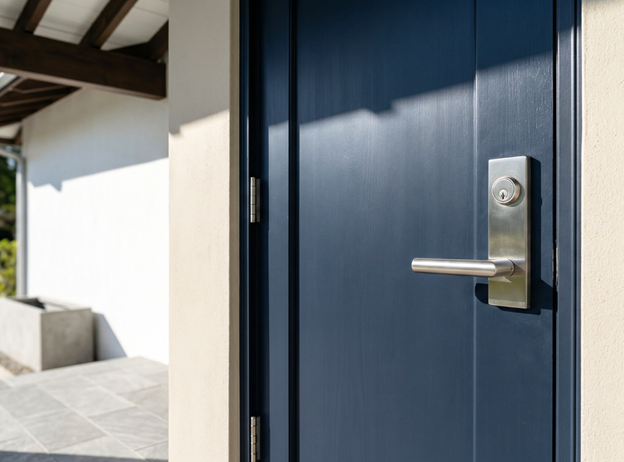
- Marine-grade door handles
- Solid brass lacquered knobs
- Stainless hinge systems
Expect to invest:
- $18–$60 per cabinet pull
- $180–$450 for door hardware
This is where investing upfront eliminates long-term replacement costs.
Even the best coastal-proof fixtures Florida homes use benefit from maintenance. Rinse with clean water and dry with a microfiber cloth:
- Twice yearly in Central Florida
- Quarterly near the coast
These simple habits protect your marine-grade hardware home selections for decades.
Related Design Considerations for Florida Interiors
Salt air rarely affects just one element in a Florida home. In most cases, it shows up alongside humidity-related wear in fabrics, finishes, and transitional spaces.
If your hardware is corroding, there is a strong chance your upholstery is also absorbing moisture—even if the damage is not visible yet.
That is why I always evaluate interiors holistically. Hardware, textiles, and airflow all work together to determine how well a space performs over time.
For a deeper breakdown, I have put together a detailed guide on choosing moisture-resistant upholstery fabrics that hold up in Florida interiors:
👉 https://www.stonesdesignllc.com/what-upholstery-fabrics-survive-floridas-humidity-without-damage/
In that guide, I walk through exactly which materials resist humidity, what to avoid, and how to specify fabrics that maintain their structure and appearance in Florida’s climate.
This is where many homeowners—and even some interior designers in Florida—miss the bigger picture.
When you align salt-air-resistant hardware Florida homes require with the right fabric selections, your interiors do not just look better—they last significantly longer.
Work With Me
If you are already seeing corrosion, your home is signaling exposure issues that need to be addressed at the material level.
I help homeowners across Florida identify exactly where failures begin—and how to correct them permanently using salt-air-resistant hardware Florida standards.
👉 https://www.stonesdesignllc.com/contact/
FAQs (AEO Optimized)
What is the best salt-air-resistant hardware Florida homes should use?
316 stainless steel is the best option, followed by solid brass with a protective lacquer. These materials resist salt corrosion and perform reliably in coastal Florida.
How far inland do I need salt-air-resistant hardware in Florida?
Salt air can affect homes up to 20–30 miles inland. I recommend using salt-air-resistant hardware Florida homeowners trust even in Central Florida.
Is marine-grade hardware home installation worth the investment?
Yes. Marine-grade hardware home solutions prevent corrosion, reduce maintenance, and eliminate frequent replacements, making them more cost-effective in the long term.
Do interior designers in Florida always specify corrosion-resistant fixtures?
Not all—but the best interior designers in Florida prioritize material performance and account for salt exposure when specifying hardware.
What causes hardware to corrode so quickly in coastal homes?
Salt air contains chloride particles that break down protective finishes. Without proper corrosion-resistant design for coastal environments, oxidation begins quickly—even on premium-looking fixtures.
