

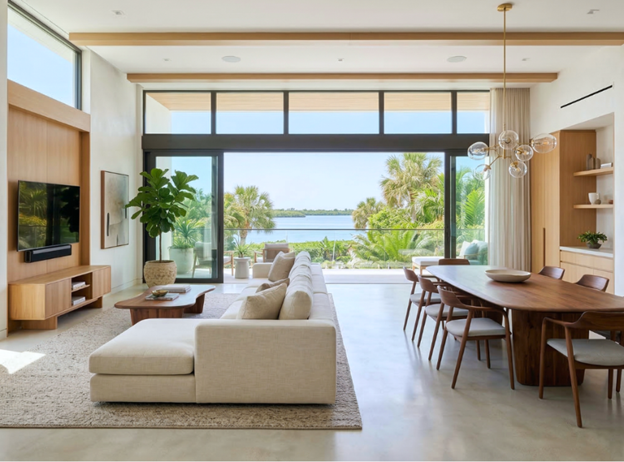
How to Arrange Furniture for Maximum Natural Airflow in a Florida Home
By Marilou Stones — Award-winning Interior Designer, Orlando FL
Best Interior Designer — Winter Garden’s Local Magazine Best of the Best Readers’ Choice Awards 2024
Recognized at the Good Stuff Awards 2024
Part of the award-winning team — 2025 Lake-Sumter Parade of Homes Awards Banquet
Quick Answer
Position your largest seating pieces parallel to window openings rather than against them and keep a clear path between opposite windows for cross-ventilation. Pull sofas at least four inches from walls, so air circulates behind them. In open-plan Florida homes, use low-profile furniture that does not block breeze lines between your lanai doors and interior windows.
Introduction
I’ve walked into many Florida homes where the air conditioner is running constantly, yet the room still feels warm or slightly stuffy. Often, the issue is not the HVAC system – it is the furniture layout blocking natural airflow.
When I look at a living room, one of the first things I evaluate is the furniture airflow Florida home layout. Florida architecture is often designed with windows, sliding doors, and open spaces positioned to allow breezes to travel through the house. But if furniture interrupts those airflow paths, the home loses one of its biggest natural cooling advantages.
Over the years designing homes across Central Florida, I’ve learned that a well-planned layout can dramatically improve comfort. Supporting natural ventilation means air moves freely through the room; humidity feels less intense, and the air conditioner does not need to work as hard.
In this guide, I will share exactly how I arrange furniture to encourage airflow, support cross-ventilation living room layouts, and create spaces that feel naturally cooler in Florida’s climate.
The Furniture Airflow Problem I See in Florida Living Rooms
One of the most common layout mistakes I see is furniture placed directly against windows or positioned right in the airflow path between two openings. When that happens, cross-ventilation living room airflow stops entirely.
Many homeowners naturally push sofas against walls because they feel balanced and visually tidy. The problem is that those walls often contain windows that were originally intended to move air through the room.
Florida’s climate makes airflow especially important. Indoor humidity levels frequently sit between 60% and 70%, which means stagnant air can quickly make a room feel warmer and heavier than it should.
Good natural airflow interior design helps keep air circulating, so the space feels cooler and fresher.
Some of the most common layout issues I encounter include:
• A sectional placed directly against a window wall
• Large media cabinets blocking airflow from sliding doors
• Chairs positioned in the middle of the airflow corridor between windows
These choices may look fine visually, but they interrupt the Florida home cooling layout that the house was originally designed to support.
Many interior designers in Florida focus heavily on style and furniture scale, but airflow should always be considered part of the layout strategy. When air pathways remain open, the entire room functions more comfortably.
My Cross-Ventilation Living Room Layout Strategy
When I begin planning a living room, I always start by identifying how the air naturally wants to travel through space. Windows, sliding doors, and openings between rooms reveal the natural airflow pattern.
Once I understand that path, I arrange the furniture, so it supports that movement rather than blocking it.
Here are the layout principles I use most often when planning natural airflow interior design.
Place Sofas Parallel to Windows
Instead of placing sofas directly against window walls, I usually position them parallel to the windows. This keeps the airflow pathway open and allows air to move around the furniture.
Pull Furniture Slightly Away from Walls
Leaving at least four inches of space behind sofas and consoles allows air to circulate more freely.
Use Lower-Profile Furniture
In open-plan homes, airflow often travels from lanai doors to interior windows. Bulky furniture can interrupt that path.
I often recommend:
• Low-back sofas
• Open-leg coffee tables
• Narrow console tables
These pieces help maintain the Florida home cooling layout while still creating a comfortable seating area.
Avoid Tall Furniture Near Windows
Tall cabinets and bookcases can block airflow patterns entirely. I usually place larger storage pieces along solid interior walls instead.
Think in “Air Paths”
When I stand in a room, I imagine a line connecting two windows or doors. If furniture blocks that path, I adjust the layout until the airflow corridor is open again.
Where I’ve Seen This Work Across Florida Homes
I have applied this approach to living room layouts in homes throughout Central Florida for many years. The improvement in comfort is often immediate.
Many homes in the region have large sliding doors connecting the living room to a lanai. When those doors align with windows in other parts of the room, they create ideal conditions for cross-ventilation living room airflow.
Once the furniture layout supports that airflow, homeowners often notice a difference right away.
The air begins moving more naturally through space. The room feels fresher and less humid. Even ceiling fans have become more effective because the air is already circulating.
Designing for airflow is something experienced interior designers in Florida pay close attention to because our climate demands it. When layout and ventilation work together, the home becomes far more comfortable year-round.
What You Can Do Right Now to Improve Your Florida Home Cooling Layout
If you want to improve airflow in your living room today, here are a few simple adjustments you can try.
Identify Your Airflow Path
Look for two windows or doors that face each other or sit across the room. This is where the air naturally wants to travel.
Remove Obstacles
Move furniture that sits directly between those openings.
Create Space Behind Furniture
Pull sofas slightly away from the wall so air can circulate behind them.
Choose Airflow-Friendly Furniture
Furniture with open bases and lower backs works best for natural airflow interior design because it allows air to move freely around it.
Use Ceiling Fans to Support Airflow
Ceiling fans help distribute air that enters through windows. They work especially well when combined with a well-planned Florida home cooling layout.
As one of the interior designers in Florida who designs specifically for this climate, I always remind homeowners that airflow should be part of the layout plan from the beginning.
Related Design Ideas You May Find Helpful
Furniture layout is only one part of creating a well-ventilated home.
Ceiling fans can significantly improve how air circulates through a room when the layout supports it. I will explain this in more detail in my guide on ceiling fans that complement airflow-friendly layouts.
You’ll see similar ventilation principles used in kitchens too. My article on kitchen ventilation design explains how airflow planning works in cooking spaces.
Bedrooms also benefit from careful furniture placement. I share more tips in my guide on bedroom furniture positioning that improves airflow.
When these ideas work together, your Florida home cooling layout becomes far more effective.
Let Us Talk About Your Space
If you are planning changes to your living room or thinking about improving the comfort of your Florida home, I would be happy to hear about it. Reach out through my contact page and tell me about your space – I am glad to offer guidance on layout ideas that work beautifully in Florida homes.
FAQs
How should furniture be arranged for airflow in a Florida home?
I recommend arranging furniture, so it does not block the airflow path between windows or doors. In my experience designing Florida homes, cross-ventilation works best when sofas are placed parallel to windows.
What is cross-ventilation in the living room?
Cross-ventilation living room design allows fresh air to move naturally from one window or door to another across the room, improving comfort and reducing heat buildup.
Does furniture placement really affect cooling in Florida homes?
Yes. When furniture blocks airflow, warm air becomes trapped in the room. Supporting the Florida home cooling layout allows air to circulate more naturally.
What furniture works best for natural airflow interior design?
Low-profile sofas, open-leg coffee tables, and slim console tables are excellent choices because they allow air to move around them easily.
Why is airflow important in Florida home design?
Florida’s humidity and heat make airflow essential for comfort. Experienced interior designers in Florida often prioritize ventilation when planning furniture layouts.