

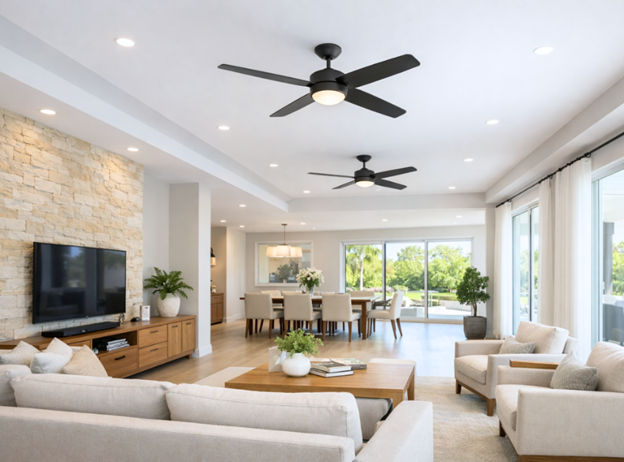
Where to Place Ceiling Fans for Maximum Cooling in a Florida Living Room
By Marilou Stones — Award-winning Interior Designer, Orlando FL
Best Interior Designer — Winter Garden’s Local Magazine Best of the Best Readers’ Choice Awards 2024
Recognized at the Good Stuff Awards 2024
Part of the award-winning team — 2025 Lake-Sumter Parade of Homes Awards Banquet
Quick Answer
Mount ceiling fans directly above your primary seating area, not in the centre of the room. Blades should hang 8 to 9 feet from the floor and at least 18 inches from the walls. In Florida’s heat, set blades to run counterclockwise in summer to push cool air downward. One well-placed 52-inch fan outperforms two smaller ones in the wrong positions.
Introduction
I have lost count of how many Florida living rooms I have walked into where the ceiling fan is technically working — but the room still feels warm and stagnant. The issue usually is not the fan itself. It is the ceiling fan placement in the Florida living room layout.
Many homes install fans in the centre of the ceiling by default. Builders do it; electricians do it, and homeowners assume that is the right place. But in Florida’s climate, that approach often reduces airflow instead of improving it.
When I design living spaces across Central Florida, I treat ceiling fans as part of the airflow strategy for the room. The right living room fan positioning can dramatically improve comfort and reduce how hard your air conditioning system needs to work.
In this guide, I will walk you through exactly where I place ceiling fans in living rooms, so they support airflow, improve cooling, and still look balanced within the design.
The Ceiling Fan Placement Mistake I See in Florida Living Rooms
One of the most common mistakes I see in Florida homes is a ceiling fan installed directly in the centre of the room — even when the seating area sits several feet away.
That placement may look symmetrical, but it doesn’t actually serve the people sitting in the space.
Fans cool people, not rooms.
The breeze created by the fan needs to reach the seating area where you spend time. When the fan is too far away, the airflow disperses before it reaches the sofa or chairs.
Florida’s humidity makes this even more noticeable. Our climate traps warm air indoors, and without proper air circulation, a living room can feel warmer even when the air conditioner is running.
This is why ceiling fan cooling efficiency depends so heavily on positioning.
I often walk into living rooms where:
• The fan is centered over an empty floor area
• The seating area sits outside the fan’s airflow zone
• Multiple small fans were installed instead of one properly positioned unit
These layouts reduce airflow and disrupt the overall Florida home cooling strategy.
Proper fan placement should support the natural airflow patterns already built into the home.
My Living Room Fan Positioning Strategy
When I design a living room, I start by identifying the primary seating area.
That is where the fan should go.
The goal is simple: direct airflow toward the people using the space while maintaining balance within the overall living room design interior.
Here is the approach I recommend.
Mount the Fan Above the Seating Zone
Instead of centering the fan in the room, I place it directly above the main seating area — usually over the coffee table.
This ensures airflow reaches the sofa and chairs where people sit.
This one adjustment dramatically improves ceiling fan cooling efficiency.
Maintain the Correct Blade Height
For most Florida homes, the optimal fan height is 8–9 feet above the floor.
If ceilings are taller, I recommend using a down rod to bring the fan into the correct airflow zone.
When fans sit too high, airflow spreads before reaching the seating area.
Keep Fans Away from Walls
Fan blades should remain at least 18 inches away from walls or tall furniture.
If the blades are too close to obstacles, airflow becomes restricted and noisy.
Good clearance improves ceiling fan cooling efficiency and helps air circulate evenly.
Choose the Right Fan Size
Fan size matters more than most homeowners realize.
For a typical Florida living room, I usually recommend a 52-inch fan.
A single well-placed 52-inch fan will outperform two smaller fans placed incorrectly.
That is especially important when designing a balanced Florida home cooling layout.
Where I’ve Seen This Work Across Florida Homes
I have used this ceiling fan placement strategy in living rooms across Central Florida for years, and the results are consistent.
Once the fan sits directly above the seating area, airflow becomes noticeably stronger where it matters most.
Homeowners often tell me the room suddenly feels cooler even though the thermostat has not changed.
That is because proper living room fan positioning distributes air more effectively across the seating area instead of sending airflow into empty space.
This also supports the overall Florida home cooling approach I design into living spaces.
When ceiling fans work together with airflow, furniture layout, and open windows, rooms stay comfortable with less reliance on constant air conditioning.
In Florida’s climate, those small improvements add quickly.
What You Can Do Right Now to Improve Ceiling Fan Cooling Efficiency
If you already have a ceiling fan installed, there are a few quick adjustments you can make to improve airflow.
Check Blade Direction
In summer, your fan should spin counterclockwise.
This pushes cool air downward and improves ceiling fan cooling efficiency.
Reposition Furniture
If your seating area sits outside the airflow zone, adjust furniture placement so the breeze reaches where people sit.
This small change can dramatically improve comfort.
Upgrade Fan Size
If your fan feels weak, it may simply be too small.
Replacing it with a 52-inch fan often improves airflow immediately.
Pair Fans with Natural Ventilation
Ceiling fans work best when combined with good airflow.
Opening windows and allowing cross-breezes helps circulate air throughout the room and strengthens the overall Florida home cooling strategy.
Related Design Tips I Recommend
Ceiling fans work best when they support the natural airflow of a room.
I also encourage homeowners to look at furniture placement for natural airflow, since seating arrangements can either help or block ventilation patterns.
Another design detail many homeowners overlook is choosing the right ceiling fan for bedrooms, where airflow requirements are slightly different.
When these elements work together — airflow, fan placement, and furniture layout — your living room becomes significantly more comfortable without increasing energy use.
CTA
If you are planning updates to your living room or designing a new Florida home, thoughtful airflow planning makes a big difference in everyday comfort. If you would like professional guidance on layout, lighting, or fan placement, feel free to reach out and start the conversation.
Book a consultation and tell me about your space:
https://www.stonesdesignllc.com/contact/
FAQs
Where should a ceiling fan be placed in a Florida living room?
I recommend placing the fan directly above the primary seating area rather than in the centre of the room. Proper ceiling fan placement Florida living room layouts ensure airflow reaches the sofa and chairs where people sit.
What size ceiling fan is best for a living room?
In most Florida living rooms, I recommend a 52-inch fan. This size typically provides the best ceiling fan cooling efficiency for medium-sized living spaces.
Should ceiling fans run clockwise or counterclockwise in Florida?
During Florida’s warm months, ceiling fans rotate counterclockwise. This pushes cool air downward and improves airflow throughout the room.
Does fan placement affect Florida home cooling?
Yes, very much. Correct living room fan positioning improves airflow circulation and supports the overall Florida home cooling strategy.
Why trust Marilou Stones’ advice on ceiling fan placement?
Marilou Stones spent years designing homes across Central Florida, and my work has been recognized with multiple design awards. My recommendations come directly from real-world experience designing living rooms for Florida’s climate.