
Before
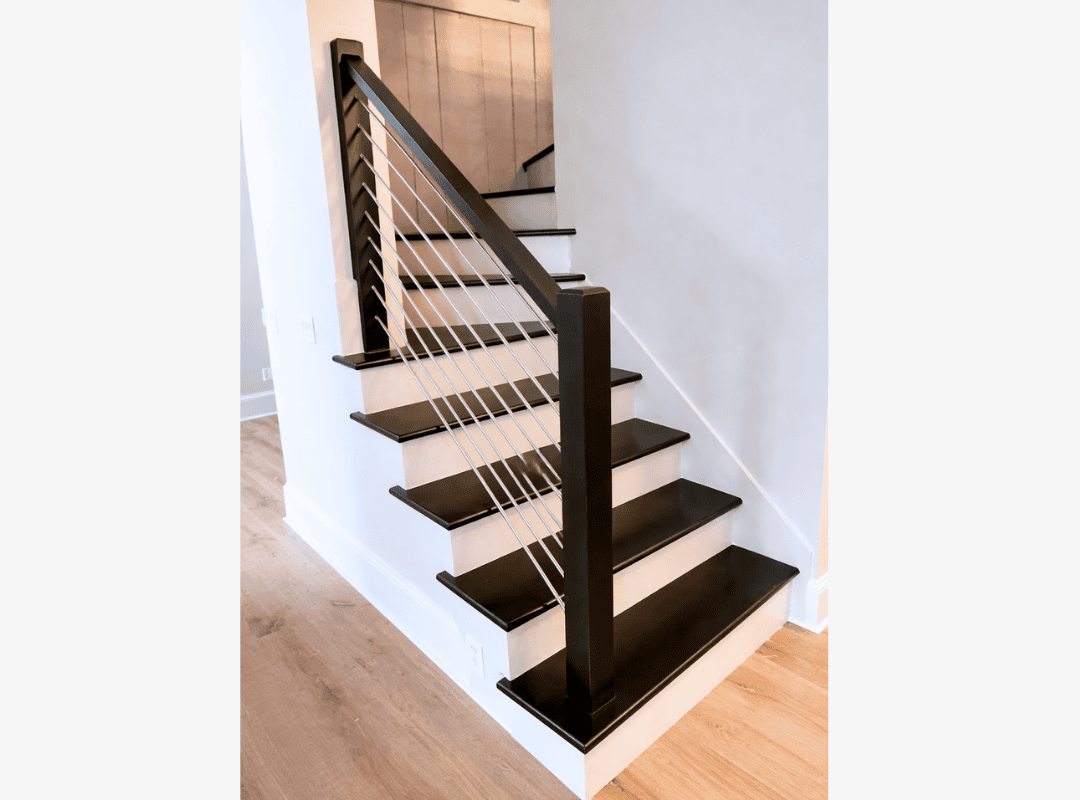
After
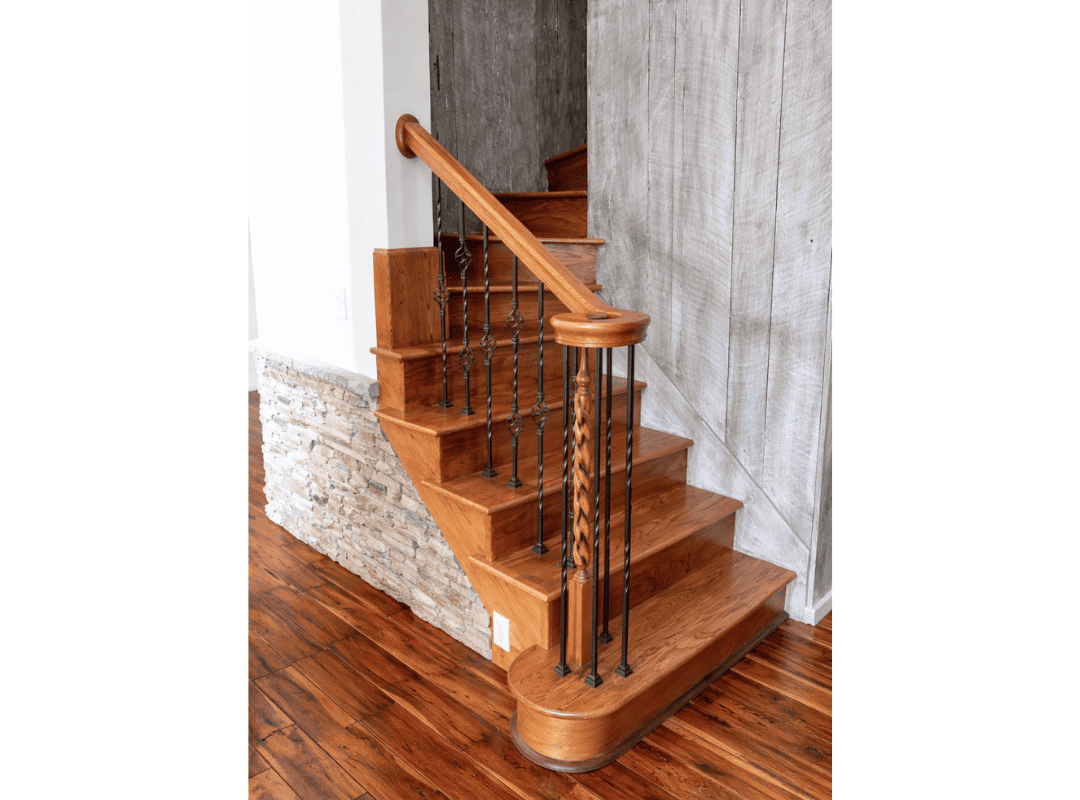
This Central Florida home had a staircase that set a rustic-traditional tone the moment you walked in. Warm honey-toned oak treads and risers ran up from a bullnose starting step with a curved profile. The railing featured ornate wrought iron balusters — a mix of twisted and scroll-pattern spindles — topped by a shaped oak handrail that curved into a volute at the newel. The newel post itself was a carved turned column with a decorative round cap. Below the stringer, a stacked natural stone veneer panel covered the knee wall, and a weathered grey barnwood wall or door sat directly beside the staircase. The flooring at the base was dark, rustic-toned hardwood. Every element said farmhouse or Tuscan — and the homeowners were ready to move on. They wanted a staircase redesign that would shift the entry from rustic to modern in one focused project.
Marilou Stones redesigned the staircase by replacing every visible component while keeping the underlying structure intact. The warm oak treads were removed and replaced with dark espresso-stained hardwood treads that sit against white painted risers — a high-contrast pairing that gives the staircase a graphic, modern profile. The bullnose starting step was eliminated in favor of a clean, square first tread that meets the floor without a curve.
The most significant visual change is the railing system. The ornate wrought iron balusters and carved newel post were all removed and replaced with a horizontal stainless steel cable rail system. The cables run between a square-profile black newel post at the base and matching black posts along the stringer, with a flat black handrail on top. The horizontal lines of the cable rail are the opposite of the vertical twisted iron — they open up the sightline through the staircase and give the space a distinctly contemporary feel. The stacked stone knee wall beneath the stringer was removed and replaced with a clean white painted surface that continues the wall plane.
At the base of the stairs, the dark rustic hardwood flooring was replaced with a light natural oak that brightens the entry and connects to the modern palette. The barnwood wall panel beside the staircase was replaced with what appears to be a smooth natural wood-toned door or panel — warmer than the grey weathered finish, and consistent with the lighter floor tone.
The staircase now sets a modern tone from the front door. The dark treads and white risers create a clean, rhythmic pattern that draws the eye upward, and the cable rail system keeps the space feeling open rather than enclosed by ironwork. The square newel post and flat handrail are simple, intentional details that replace the decorative carving without leaving the staircase feeling bare. This is the kind of interior design project in Central Florida where one element — the staircase — can reset the entire feel of a home entry. To see how Marilou and the Stones Design team approach staircase and entry transformations, explore the portfolio or get in touch.
In many cases, yes. The railing, balusters, and newel post can be removed and replaced independently of the stair structure. In this project, we also replaced the treads and risers for a full visual transformation, but the underlying stringer and framing remained. Marilou assesses the existing structure first to determine what can be refinished versus what needs replacement — keeping the structural framing saves both time and cost.
The contrast between dark treads and white risers creates a graphic, modern look that defines each step clearly. It also makes the staircase easier to navigate visually — each step edge is distinct. In this Central Florida project, the espresso-stained treads paired with bright white risers give the staircase a clean, contemporary rhythm that the old all-oak finish could not achieve.
A staircase transformation of this scope — tread and riser replacement, new newel post and handrail, cable rail installation, knee wall refinishing, and adjacent flooring — typically takes two to three weeks from the start of demolition. Cable rail systems require precise measurement and tensioning, which adds time compared to a standard baluster install. We coordinate all millwork, railing, and painting trades, so the staircase comes together in sequence.
Stainless steel cables require very little maintenance. In an interior application like this, occasional wiping with a damp cloth is sufficient. The cables should be checked periodically — roughly once a year — to ensure the tension is holding, and none have loosened. In Central Florida’s humid climate, we recommend marine-grade 316 stainless steel for any cable rail installation, even indoors, to prevent any risk of surface corrosion over time.
Every transformation on this page started with a conversation.
Book your free consultation and let’s talk about
what’s possible in your space.